AI App
 Astrology App
 Beauty Salon App
 Dating App
 E-Learning App
 Education App
 Ecommerce App
 Fintech App
 Food Delivery App
 Gaming App
 Grocery Delivery App
 Healthcare App
 Home Services App
 Hotel Booking App
 Ludo Game App
 Media Entertainment App
 OTT App
 Political App
 Pet Care App
 Real Estate App
 Taxi Booking App
 Travel App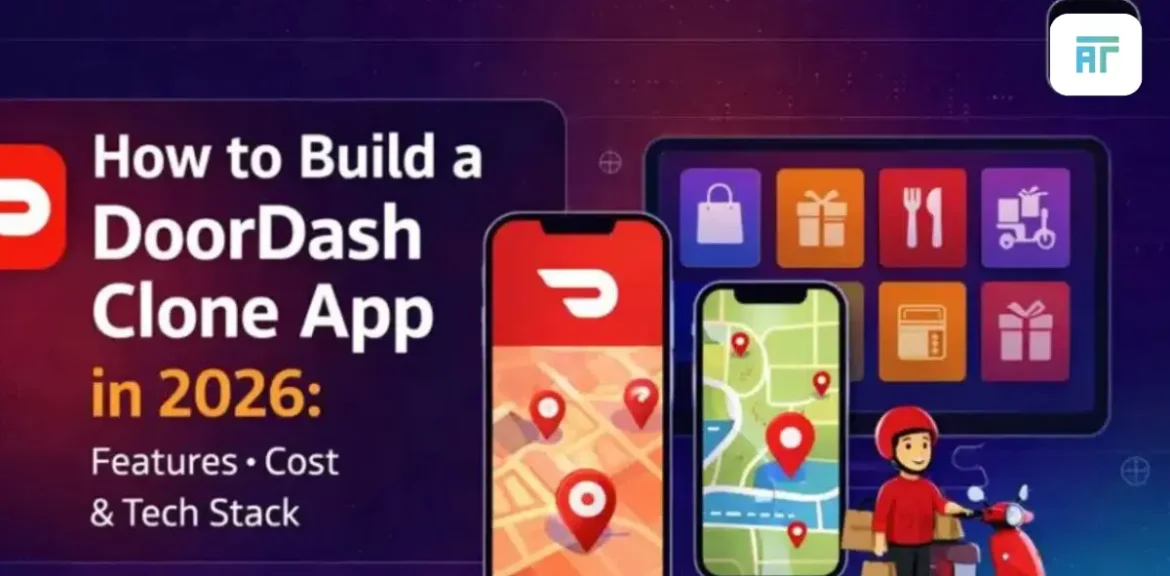

On-demand food delivery apps have transformed the way that customers, restaurants, and delivery partners interact through a single digital platform. In the current scenario, with the increasing dependence on smartphones, tablets, and web platforms, customers prefer to order their meals online rather than calling or going to the restaurant. Industry giants such as DoorDash Clone App, Uber Eats, and Grubhub have elevated the level of customer expectations with their quick delivery, convenience, and the availability of real-time order tracking.
Changes in consumers’ lifestyle habits are forcing startups and enterprises to channel their investments into scalable delivery platforms. Astha Technologies helps this change by creating dependable, efficient systems. Opting for the right food delivery app development company guarantees a harmonious mix of features and cutting-edge technology. Here is a blog that discusses steps and tech stack.
What Is a Food Delivery App and How Does It Work
A food delivery app is a kind of digital tool that locates restaurants and delivery partners in the vicinity of the customer. It then allows the customer to place the order at the restaurant and get the food delivered via the mobile or web applications. In contrast to traditional restaurant ordering that relies on phone calls or visits, the ordering platforms based on apps offer the menus in real-time, the prices being transparent, the orders being traceable, and the payments being online. To develop systems emphasizing speed, accuracy, and a hassle-free user experience, companies or businesses often partner with a mobile app development company in India.
The chain of events can be outlined as the user ordering, the restaurant preparing the food, the delivery partner picking up, and the food being delivered. An app ecosystem similar to DoorDash comprises a customer app, a restaurant partner app, a delivery partner app, and an admin dashboard. With the help of backend systems, real-time APIs, and location tracking, the coordination is seamless, and at the same time, scalability and performance become major issues during times of heavy order volumes.
Why Build a DoorDash Clone App in 2026
Online food ordering and hyperlocal delivery are two segments that continue to grow as people demand faster service and more restaurant options. One of the most profitable ways to make money is to build a DoorDash clone app and earn through commissions, delivery fees, and surge pricing models. Among such marketplaces, one can expand from city to city or grab a niche while keeping full control of branding, pricing, and customer data. Features such as subscriptions, promotions, and loyalty programs help in generating repeat sales. A partnership with a mobile app development company in Noida results in affordable development and an architecture that can easily be scaled up.
Step 1: Understand Your Target Users
Creating a DoorDash clone app initially requires a clear comprehension of the potential users and their expectations from the platform. Different user groups are served by food delivery apps, and the features, the app flow, and the overall performance are mostly influenced by these groups. Proper research at the initial stage of the project helps to set the priorities right and also limits the food delivery app development cost as eliminating unnecessary complexities will be your main focus.
The major user groups to be researched:
- Consumers ordering daily meals, family orders, or food late at night
- Restaurants that refer to cloud kitchens, local outlets, and multi-branch brands
- Delivery partners who are working full-time or part-time with flexible schedules
Investing in a deep understanding of behavior, expectations, and pain points at this point guarantees a user-centric, scalable platform.
Step 2: Choose the Right Food Delivery Business Model
The choice of a business model determines the way your DoorDash clone app functions, generates revenue, and expands in the future. Each model provides varying degrees of control and complexity, so it’s crucial to match the business structure with the market demand and the company’s operational goals.
Common food delivery business models are as follows:
- Aggregator model: Restaurants handle their own deliveries, which results in quicker launch and less operational disruption.
- Marketplace with logistics: The platform takes charge of delivery partners to make sure that the quality of service is always maintained.
- Hybrid model: It is the combination of the restaurant’s self-delivery and platform-managed delivery, which will allow the restaurant more flexibility.
Key revenue streams:
- Commission percentage for each order
- Delivery expense charging
- Extra-charges during peak hours
- Subscription-based services like DashPass
Model selection varies depending on city size, restaurant density, and operational capacity. Collaborating with a food delivery app development company is a great way to make sure the business model you prefer could be a potential long-term, scalable and efficient growth one.
Step 3: Essential Features of a DoorDash Clone App
A DoorDash clone app is one that synthesizes multiple features connecting the users, restaurants, delivery partners, and administrators to enable fast ordering, accurate tracking, secure payments, and seamless operations at a global scale.
Features for Customers (Users)
- Effortless sign-up and login
- Restaurant discovery based on the user’s location
- Smart search and filters by cuisine, price, and ratings
- Restaurant menus with photos and choices for customer orders
- Cart management and ordering at a specific time
- Live order tracking through maps
- Different payment methods
- Order records and fast purchase again
- Scores, testimonials, and customer service
- Notifications for order status and special deals
Features for Restaurants
- Onboarding and restaurant verification
- Managing menus and prices
- Ability to accept orders and update preparation status
- Tracking earnings and payouts
- Getting performance insights and order analytics
- Availability and opening hour control
Features for Delivery Partners
- Profile creation and document verification
- Job request alerts
- Route navigation and live tracking
- Earnings dashboard
- Shift and availability management
Features for Admin Panel
- Management of users, restaurants, and riders
- Commission and pricing control
- Monitoring orders in real-time
- Dispute handling and support tools
- Analytics and business reports
Step 4: Design Simple and User-Friendly Screens
UI and UX design have an immediate impact on the user’s decision to order quickly and to keep using the app. A well-laid-out food delivery app creates less resistance, makes navigation easy, and helps in decision-making at a faster pace. To develop interfaces that provide a good balance between usability, performance, and visual clarity, many companies collaborate with a mobile app development company.
Major UI/UX design principles are:
- Well-organized layouts that allow the quick discovery of restaurants
- Minimum use of steps when going from viewing menus to the final payment
- User, restaurant, and delivery partner separate dashboards
- Design focused on accessibility with large, legible texts and easily identifiable buttons
- Uniform layouts on both mobile and web platforms
Prototyping and usability testing are the best ways to finalize these screens early on, uncover user frustrations, and deliver a trouble-free ordering experience on all devices.
Step 5: Technology Stack for DoorDash Clone App Development
Picking the right technology stack is a must when it comes to building a fast, efficient, and easily scalable food delivery platform. The choice of technology stack is directly responsible for app speed, the precision of its real-time tracking, data security, and the overall user experience. Astha Technologies is all about selecting tried and tested, flexible technologies that enable smooth operations even during the busiest ordering hours. Collaborating with a dependable food delivery app development company will help your platform stay stable, secure, and poised for long-term growth.
| Layer | Recommended Technologies |
| Frontend Technologies | Mobile Apps: Flutter, React Native, Swift, KotlinWeb Admin Panel: React |
| Backend Technologies | Node.js or PythonREST APIs, Microservices Architecture |
| Database | MongoDB, PostgreSQL |
| Maps & Location | Google Maps, Mapbox |
| Payments | Stripe, Razorpay, Paytm |
| Notifications | Firebase Cloud Messaging, OneSignal |
| Cloud & Hosting | AWS, Google Cloud |
The right technology stack will not only help the app to be scalable, perform well, and be reliable, but also to accommodate new features and user traffic growth.
Step 6: Build and Test the Food Delivery App
Once planning and design are complete, development begins with a robust backend system that effectively handles users, orders, payments, and live tracking. Development teams create the apps for the customers, restaurant partners and delivery partners, making sure that the coordination is seamless across all platforms and devices. Secure payment gateways and GPS tracking are integrated to enable accurate transactions and real-time delivery updates, under the guidance of a mobile app development company in Noida.
Testing is thorough and highly structured, with the aim of achieving high reliability and scalability. Functional testing ensures that the main workflows operate correctly, performance testing checks if the system can handle heavy traffic without failure, and security testing is done to keep the data safe. Order simulations in the real world help find any issues that have been missed before the launch.
Step 7: Smart Features for Food Delivery Apps in 2026
In 2026, food delivery apps mostly feature smart technologies that not only make users’ lives easier but also improve delivery efficiency and encourage long-term customer retention. Advanced capabilities allow platforms to handle demand, personalize journeys and perform day-to-day activities smoothly. Astha Technologies adds such intelligent features to the list of solutions, helping the very business that engages with the consumer to remain competitive and ready for the future.
The main smart features are:
- AI-powered restaurant and meal suggestion considering user history
- Adjustable delivery charge depending on the time of day (peak or off-peak)
- Automated order combination for quicker and more efficient delivery
- Subscription-based plans for free delivery to promote recurring orders
- In-app messaging for seamless communication between users and delivery partners
- e-Invoices and e-Receipts for simple record maintenance
Not only do these features improve the overall user experience but they also lead to higher operational efficiency and more stable revenues.
Step 8: Launch and Promote Your DoorDash Clone App
Just releasing a DoorDash clone app on the app stores is not enough for it to succeed. A carefully thought-out launch will entice the first batch of users, test the performance, and generate buzz in the chosen areas. Doing the groundwork before launch means the system is reliable, easy to use, and capable of managing actual orders right from the start.
The main launch and promotion activities involve:
- Releasing the beta version to a small pool of users to get their feedback and resolve bugs
- Launching on App Store and Play Store, with the listings being ranked well
- Giving introductory price cuts and complimentary delivery to get the first orders
- Using referral and loyalty programs to generate natural growth
- Doing restaurant onboarding drives to increase service coverage
- Implementing local digital marketing approaches that are aimed at city-level visibility
Keeping the operations under the radar after the launch allows making adjustments and increasing the retention. Astha Technologies is facilitating businesses in their launch planning and the early-stage growth implementation.
Step 9: Constant Maintenance and Updates
Once the app is launched, it is essential to give it regular attention so that everything continues to work well. Errors are patched up when they come up, and the efficiency is fine-tuned when the quantity of orders fluctuates. Features that are new are only implemented if they are considered beneficial to users or partners. Information regarding the orders and deliveries is monitored in order to identify any delays or problems. The safety of payments and personal data is ensured by carrying out security updates punctually. It becomes much more efficient to continue fixing and upgrading the application as the platform expands when a mobile app development company in India is involved.
DoorDash Clone App Development Process: Step-by-Step Roadmap
| Development Stage | Description |
| Planning and Research | Market analysis, competitor study, and requirement gathering |
| UI/UX Design | Wireframes, user journeys, and interface design |
| Frontend Development | Building user-facing apps for customers, restaurants, and riders |
| Backend Development | Server setup, APIs, databases, and admin logic |
| Core Ordering Features | Menu browsing, cart, checkout, and order management |
| Restaurant and Delivery Panels | Dashboards for order handling and delivery execution |
| Payment Integration | Secure payment gateway and transaction management |
| Real-Time Tracking | Live order and delivery tracking using GPS |
| Testing and QA | Functional, performance, and security testing |
| Deployment | App Store and Play Store publishing |
| Post-Launch Support | Updates, monitoring, and performance optimization |
Design Tools Used to Develop DoorDash Clone App
Design tools allow teams to design layouts, check usability, keep visual consistency, and provide smooth, scalable food delivery app interfaces quickly.
| Design Purpose | Tools Used |
| Wireframing | Figma, Balsamiq |
| Prototyping | Figma, InVision |
| UI Design | Figma, Adobe XD |
| Frontend Design | React-based design systems, component libraries |
| Color and Font Systems | Coolors, Google Fonts |
Backend for DoorDash Clone App Development
| Backend Component | Recommended Technologies |
| Programming Languages | Node.js, Python |
| Databases | MongoDB, PostgreSQL |
| Cloud Services | AWS, Google Cloud |
| CI/CD Pipelines | Jenkins, GitHub Actions |
| Load Balancers | NGINX, AWS Elastic Load Balancer |
Cost of Developing a DoorDash Clone App
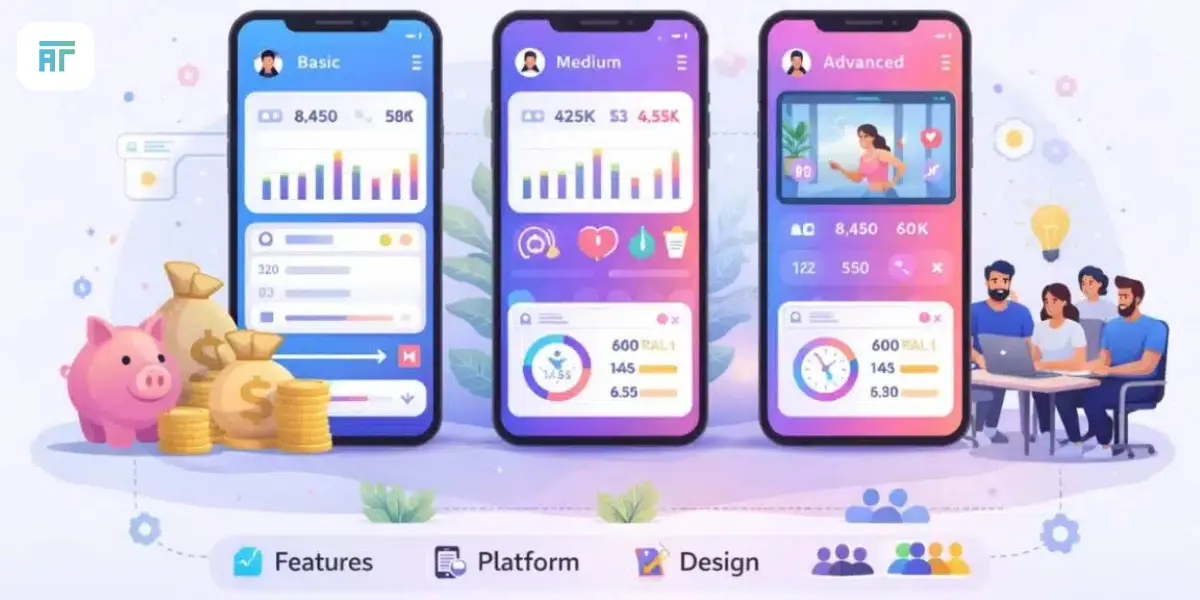
| App Level | Estimated Cost (USD) | Development Timeline |
| Basic (MVP) | USD 5000 – 7000 | 3 – 4 months |
| Mid-Level | USD 8000 – 10000 | 4 – 7 months |
| Advanced | USD 12000 – 15000 | 8 – 12+ months |
Why Choose Astha Technologies for a DoorDash Clone App Development
Astha Technologies helps companies create scalable DoorDash clone apps that prioritize performance, user-friendliness, and long-term business growth. Their team of experts has hands-on experience with on-demand platforms, including features such as live tracking, secure payments, and multi-panel systems designed to withstand very high user traffic efficiently.
Execution is organized and open at all stages, from planning and UI/UX design through to development, testing, and post-launch support. They made strategic technology choices that helped them keep the food delivery app development cost in check without compromising the app’s quality, scalability, and flexibility for future expansion across cities, services, and changes in market demand.
Conclusion
To create a DoorDash clone app, it is essential to carefully select the features, development strategy, technology stack, and budgeting of the project. The app should provide a seamless experience for users from the point of ordering and tracking the delivery in real time to handling payments securely and supporting the back end to accommodate the steadily increasing demand. Presently, food delivery apps represent not only a temporary trend but also a digital business model that offers repeat revenues and expansion opportunities over time. The results come through in thorough planning, diligent work, and, last but not least, through the selection of the right co-workers. We at Astha Technologies help businesses to design, build, and scale reliable delivery platforms confidently. Get in touch with a food delivery app development company to evolve your idea into a viable solution.
Ready to Build a Custom AI-Powered App?
12M+
App Downloads
6 Months
Free App Maintance
20+
Industries Served
3 Months
Free Maintenance
×