AI App
 Astrology App
 Beauty Salon App
 Dating App
 E-Learning App
 Education App
 Ecommerce App
 Fintech App
 Food Delivery App
 Gaming App
 Grocery Delivery App
 Healthcare App
 Home Services App
 Hotel Booking App
 Ludo Game App
 Media Entertainment App
 OTT App
 Political App
 Pet Care App
 Real Estate App
 Taxi Booking App
 Travel App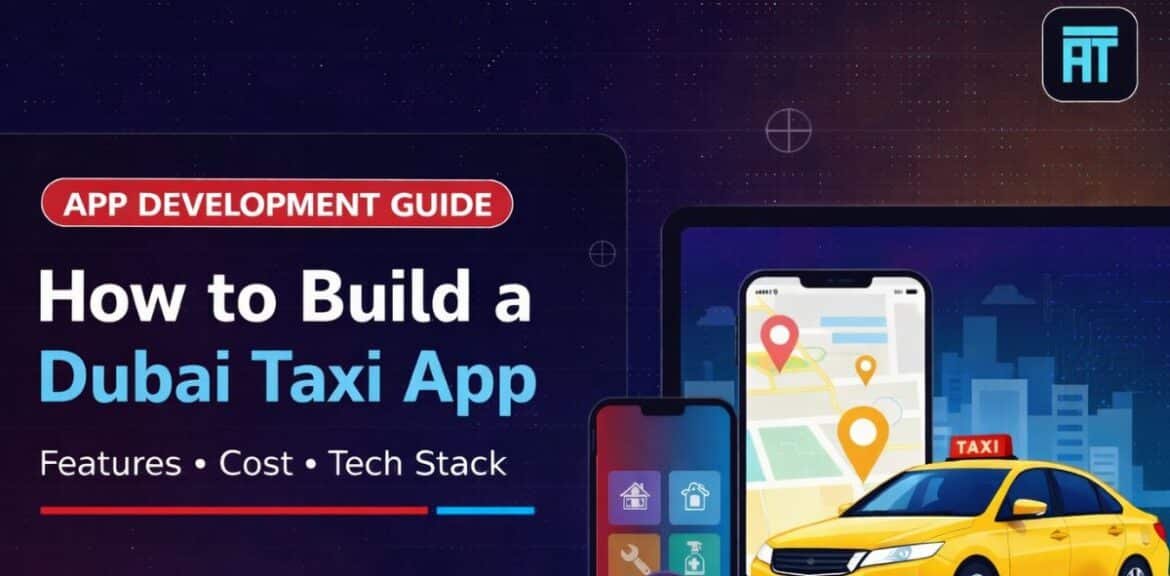

On-demand taxi apps are radically changing how people in cities get around by simply linking riders with drivers through a single digital platform. The rapid lifestyle of Dubai, massive influx of tourists, and constant demand for reliable means of transport have rapidly increased the daily use of taxi apps on smartphones, tablets, and web platforms. Market leaders such as Uber and Careem have clearly communicated what customers should expect in terms of convenience, safety, and real-time ride tracking.
Government-backed smart city initiatives are encouraging startups and enterprises to invest in mobility platforms. It is essential to work with the right taxi booking app development company. By reading this blog, you will understand features, steps in development, tech stack, and Dubai taxi app development cost in the market today.
How a Taxi Booking App Works in Dubai’s On-Demand Mobility System
A taxi booking app is a software that helps to rent a ride, along with all the features that passengers may need. It even shows different nearby drivers and helps you connect with them. Besides that, the app service is also available through the web. In contrast to the conventional methods of booking a taxi via a phone call or simply getting a taxi on the street, the app-based ride-hailing service provides fare estimates, driver information, live tracking, and one-touch payments, thus making daily commuting more efficient and straightforward.
Usually, the process begins when a user orders a ride via the app, then an available driver gets the request, reviews it, and then accepts it. The passenger is able to see the car location on the map, talk in case of necessity, and pay through the app once the trip is finished.
A Dubai taxi ecosystem is made up of passenger and driver apps, an admin dashboard, and is powered by real-time APIs, GPS, and payments. Working with a mobile app development company in India is a way to ensure the product is scalable.
Why Build a Taxi App in Dubai in 2026?
Dubai has one of the highest smartphone penetration rates in the region, which is supported by a digital-first population that depends extensively on mobile apps for their daily transportation needs. Besides, tourists, working professionals, and residents, who are always in need of safe, fast, and trackable rides, make a strong demand for the service. Furthermore, government-supported smart mobility initiatives are another factor private platforms should consider to improve the efficiency of urban transport. All these factors make Dubai an ideal market for introducing a new taxi booking solution.
A taxi app can make businesses financially strong by creating multiple revenue streams through commissions on rides, surge pricing, and premium services. Besides, companies have the option of localizing their operation by zones, pricing rules, and regulatory requirements. With the right strategy, it is possible to manage the taxi app development cost and, at the same time, develop a scalable platform that is in line with the long-term market growth.
Step 1: Understand the Dubai Taxi Market and Users
To have a winning taxi app in Dubai, one of the most important steps is to do proper local market research. Since travel demand depends on location, time, and type of user, it is necessary to analyze people’s commuting habits, tourist traffic, and customer expectations. Such data then allows determining fare structures, app layout, and the most important features.
Key user segments to analyze:
- Daily commuters looking mainly for speed and availability
- Tourists and airport travelers who want clear pricing and easy navigation
- Corporate users who need scheduled and professional rides
Driver profiles to consider:
- Independent drivers with the freedom to choose their working hours
- Fleet-based drivers under the control of a licensed operator
Regulations and user behavior not only dictate app layout but also the level of service. A mobile app development company in Noida is your best option for taking this data and building a scalable, market-compliant platform for Dubai.
Step 2: Choose the Right Taxi Business Model
Choosing the correct business model will determine the working, earning, and scaling methods of a taxi app in Dubai, which is a tightly regulated market for mobility. Each model involves different degrees of authority, expenses, and operational duties; it is very important to make the decision quickly. Some companies get help from a mobile app development company in Dubai to thoroughly assess these options before commencing development.
Common taxi app business models include:
- Aggregator model: It connects riders with independent drivers who are already on the platform. This allows a quick launch, but the platform has little control over the service quality.
- Fleet-owned model: The company owns the vehicle stock and hires the drivers. This guarantees service standards but involves a high operational cost.
- Hybrid taxi marketplace: Using a mixture of an owned fleet and independent drivers gives the company the ability to control the situation while still having room to scale.
The choice of a taxi app business model is majorly influenced by the number of cars in the fleet, the area covered, and adherence to local laws. A model that fits the firm’s growth potential will pave the way for sustainable growth.
Step 3: Essential Features of a Dubai Taxi App
To make a taxi app in Dubai, you need to get the formula right between speed, safety, and reliability, all of which have to be combined with what the local users want and the rules of the city. The features that are well thought out can help make sure that the three parties: passengers, drivers, and admins are always on the same page, and at the same time, support a large number of users and real-time operations. Besides that, hiring a professional taxi app development company to create the app can help ensure that the features are not only suitable for current maintenance and performance but also compliant and scalable.
Passenger Features
- Quick and simple registration and login
- The ability to find a cab nearby based on your location
- View the fare before making a booking
- Different types of vehicles and rides to choose from
- Track the cab in real-time
- Pay through the app or with cash
- Access your past rides and get digital receipts
- Rate and write a review
- Get notifications through the app
Features for Drivers
- Profile creation and verification
- Ride request management
- Access directions through GPS
- Review payment history and upcoming payments
- Set availability and take control of shifts
Features for Admin Panel
- Manage users and drivers
- Set pricing and commission rates
- Monitor trips
- Address complaints
- Get insights through analytics and reports
Step 4: Create Simple and User-Friendly Screens
UI and UX design have a great impact on the speed with which users book rides and the certainty of drivers accepting them. A taxi app with a neat and simple layout is good for a passenger to be able to request a ride within seconds, even if the location is congested or unfamiliar. The fewer the steps from picking the location to the confirmation of the ride, the higher the conversion and the fewer the drop-offs.
In fact, different dashboards have to be created for passengers and drivers, with the driver and passenger interfaces being designed differently and reflecting each user’s main tasks. Features of accessibility, such as font size, easy-to-press buttons, and strong color contrast, make the product usable to a larger number of people; in addition, multilingual support is really vital in a city with a majority of foreigners, like Dubai. Doing prototyping and usability testing are ways of design validation that uncover real issues of usage, and not only that, but also guarantee that the performance is smooth before the launch stage is reached. Astha Technologies applies this user-focused approach to create intuitive taxi app interfaces built for real-world use.
Step 5: Technology Stack for Taxi App Development
Selecting a technology stack that perfectly fits your needs is a critical factor when developing a fast, reliable, and scalable taxi app in Dubai. The technology stack is the main determinant of how efficiently real-time ride matching, GPS accuracy, payment reliability, and overall user experience will work. Besides, a well-thought-out technology stack can be a great leverage on the taxi app development cost by cutting down the future rework, enhancing performance, and helping the product to be scalable in the long run as the demand rises.
| Layer | Recommended Technologies |
| Frontend | Mobile Apps: Flutter, React Native, Swift, KotlinWeb Admin Panel: React |
| Backend | Node.js or PythonREST APIs, Microservices Architecture |
| Database | MongoDB, PostgreSQL |
| Maps & Location | Google Maps, Mapbox |
| Payments | Stripe, Local UAE Payment Gateways |
| Notifications | Firebase Cloud Messaging, OneSignal |
| Cloud & Hosting | AWS, Google Cloud |
Astha Technologies guides companies through the process of choosing and implementing the right technologies that will help them build highly secure and high-performance taxi platforms set for real-world scale.
Step 6: Build and Test the Taxi App
Development must start with a robust backend framework that remotely controls user management, rides, payment, and live tracking. The passenger and driver apps are then developed to be fast, clear, and reliable. The payment and GPS services’ integration is done very carefully, such that the platform is capable of supporting secure transactions, accurate navigation, and real-time updates of the ride.
Structured phases of testing are conducted to ensure quality before the product launch. Functional testing is all about core ride flows, performance testing is for checking stability under heavy load, and security testing is for keeping the user data safe. Real-world ride scenarios help to find the gaps early. A mobile app development company in Noida usually provides this assistance when a product is being prepared for the market.
Step 7: Advanced Taxi App Features for Dubai in 2026
Advanced features enable taxi apps in Dubai to manage complicated itineraries, heavy traffic, and an ethnically diverse clientele. Such means help improve the apps’ functionality, facilitate the delivery of higher-quality services, and make the interaction between different users with the apps more convenient, whether they need a car or a taxi.
Some of the main technological features are:
- AI-infused route optimization for quicker navigation and less time on the road
- Changing surge pricing according to the level of the estimated demand at the time
- Ability to book rides in advance for planned journeys and airport transfers
- Offering multi-language and multi-currency options for the benefit of the tourists
- Providing corporate clients with a business travel management platform
- Electronically delivered receipts and trip reports for transparency in payment and record-keeping
Step 8: Launch and Promote the Taxi App in Dubai
If you want to launch a taxi app in Dubai, you have to make a plan so that everything goes smoothly from the very first ride. If you do a phased rollout, you will be able to test the performance of the product, improve the user experience, and be less risky when you want to expand it to the whole city.
Main launching and promotion tasks are:
- Doing a beta test in a few selected zones to collect feedback
- Publishing the app on the App Store and the Play Store with an optimized listing
- Launching driver onboarding activities to get a driver fleet
- Giving introductory ride discounts to win early customers
- Local digital marketing and the making of a strategic partnership
- Performing continuous after-launch monitoring
Astha Technologies is your reliable partner for delivering launch and early-stage growth strategies, along with local market knowledge in Dubai.
Step 9: Continuous Maintenance and Updates
After the taxi app launch, a part of the routine operation becomes regular maintenance. A small number of bugs get fixed as they pop up, and the performance of the app is tweaked whenever the traffic patterns change. The features are upgraded slowly based on actual passenger and driver app usage rather than guesswork.
Trip records are analyzed to identify failed bookings, delays, or wrong directions. Changes are implemented based on users’ and drivers’ practical suggestions to enhance reliability. Security updates and regulatory reviews are conducted in a timely manner to prevent non-compliance. Maintenance gets easier as the platform scales when working with a mobile app development company in India.
Dubai Taxi App Development Process Roadmap
| Development Stage | Description |
| Planning and Research | Performing the market study, understanding the users, and defining the requirements |
| UI/UX Design | Creation of wireframes, user flows, and the design of the user interface |
| Frontend Development | Passenger and driver app development |
| Backend Development | Server setup, APIs, databases, and core logic |
| Core Ride Features | Ride requests, matching, pricing, and trip flow |
| Driver and Admin Panels | Dashboards for drivers and platform management |
| Payment Integration | Secure payment gateways and transaction handling |
| Real-Time Tracking | Live GPS tracking and route updates |
| Testing and QA | Functional, performance, and security testing |
| Deployment | App Store and Play Store release |
| Post-Launch Support | Maintenance, updates, and monitoring |
Design Tools Used to Develop Dubai Taxi Apps
| Design Purpose | Tools Used |
| Wireframing | Figma, Balsamiq |
| Prototyping | Figma, InVision |
| UI Design | Figma, Adobe XD |
| Frontend Design | React-based design systems |
| Color and Font Systems | Coolors, Google Fonts |
Backend for Dubai Taxi App Development
| Backend Component | Technologies Used |
| Programming Languages | Node.js, Python |
| Databases | PostgreSQL, MongoDB |
| Cloud Services | AWS, Google Cloud |
| CI/CD | Jenkins, GitHub Actions |
| Load Balancers | NGINX, AWS ELB |
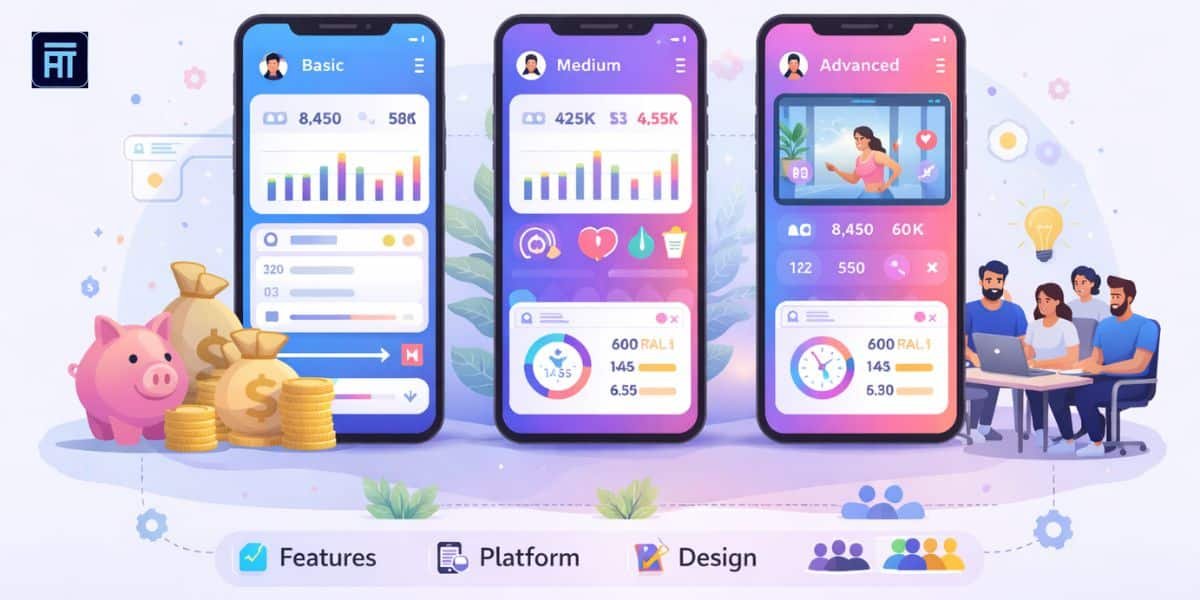
Estimated Cost of Developing a Dubai Taxi App by Complexity in 2026
| App Level | Estimated Cost (AED) | Development Timeline |
| Basic (MVP) | AED 20000 – 25000 | 3 – 4 months |
| Mid-Level | AED 30000 – 40000 | 4 – 7 months |
| Advanced | AED 50000 – 70000 | 8 – 12+ months |
Why Choose Astha Technologies for Dubai Taxi App Development
Astha Technologies develops stellar taxi apps with an emphasis on real-time performance, safety, and adherence to local regulations such as those in Dubai. Being a taxi app development company, the team is thoroughly conversant with ride matching, GPS precision, payments, and admin control.
Additionally, Astha Technologies offers live support, performance tuning, and feature upgrades after launch. Well-bodied, mapped out strategies, open communication, and a scalable system architecture give the clients the confidence to set their goals higher, win the trust of the riders, and increase their operations smoothly, even when the demand comes from different cities and service zones as time goes by, worldwide, in a safe way.
Conclusion
To develop a Dubai taxi app, it’s first and foremost necessary to thoroughly consider the needs of your passengers, drivers, and admin features, follow a well-organized development method, choose a trustworthy technology stack, and set up a realistic budget. Each part should be able to communicate seamlessly. Proper planning minimizes the uncertainties and helps to keep the taxi app development cost at a manageable level over the long run.
Taxi apps are mobility services that can last for a lifetime, requiring very precise handling, awareness of regulations, and the enhancement of the product after the launch. Astha Technologies keeps businesses on the right track in planning, creating, and scaling trustworthy platforms. Partner with Astha Technologies to move your idea forward to a Dubai transport market-ready solution and expansion across cities and user needs in the future.
Ready to Build a Custom AI-Powered App?
12M+
App Downloads
6 Months
Free App Maintance
20+
Industries Served
3 Months
Free Maintenance
×