AI App
 Astrology App
 Beauty Salon App
 Dating App
 E-Learning App
 Education App
 Ecommerce App
 Fintech App
 Food Delivery App
 Gaming App
 Grocery Delivery App
 Healthcare App
 Home Services App
 Hotel Booking App
 Ludo Game App
 Media Entertainment App
 OTT App
 Political App
 Pet Care App
 Real Estate App
 Taxi Booking App
 Travel App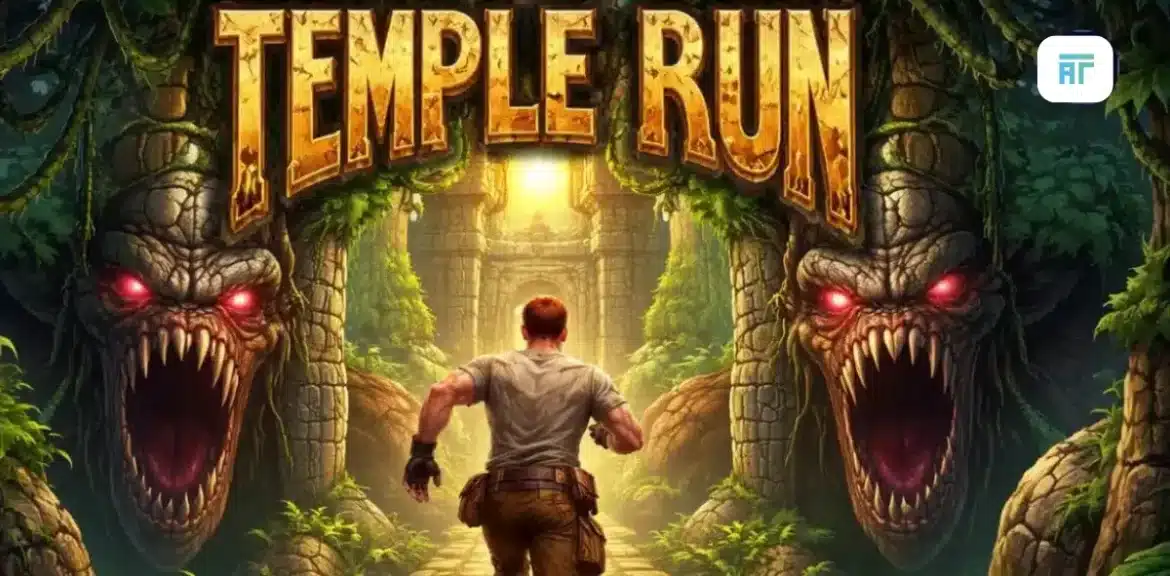

Temple Run revolutionized the mobile gaming industry with its fast-paced endless-runner gameplay, dark jungle-escape setting, and swipe-gesture controls that are very easy to use. The main reasons for its popularity are the excellent 3D graphics, the procedurally generated tracks, the coin-collecting cycle, and the intense chase game that entices players into quick but highly addictive sessions. Thus, the development cost for such technical and design-wise requirements varies widely with the level of environmental detail, animation quality, backend scalability, and platform choice.
Companies that want to build a game app like Temple Run should consider 3D asset production, runner engine optimization, monetization models, and long-term scalability. The total development cost usually ranges from ₹12 lakh to ₹18 lakh, depending on the level of detail and features. Businesses like Astha Technologies assist in development through well-controlled phases aimed at achieving performance stability, cost-effectiveness, and the ability to scale in the future.
What Makes a Temple Run-Style Game Popular and Profitable?
One of the main reasons Temple Run-style games are so successful is their gameplay, in which the main character is constantly moving forward, which automatically keeps the player on the alert. The change of lanes by sliding, jumping, and ducking is all very easy to understand and very quick to respond. As the tempo quickens, the risk level automatically rises; the pleasure is both thrilling and nerve-racking. Initially, an enemy pursues the player, adding tension and the urge to act immediately. The player remains motivated by continually collecting coins and buying upgrades that lead them to the next level. These games tap into the idea of short and instant game rounds that perfectly fit the lifestyle of casual mobile users.
Coin packages, character unlocking purchases, watching ads for free revival, and limited-time bundles, together with seasonal character costumes, are the main sources of revenue. The retention is based on the game controls being smooth, the difficulty level being increased step by step, and the monetization being fair. A skilled mobile app development company in Noida can carefully organize these aspects in order to maximize both engagement and long-term profitability.
Key Factors Influencing the Cost of Developing a Game Like Temple Run
Which technical and artistic elements affect the final expenditure for an endless runner? A dependable mobile application development company in Delhi NCR thoroughly reviews these factors before deciding on the scope and budget.
1. Core Runner Engine & Procedural Track Generation
Temple Run-type games are built on a strong running engine that allows for infinite modular path segments, seamless spawning systems, and dynamic obstacle placement to ensure a continuous gameplay experience. Most games with fixed levels are static, but the path in this game is always changing reactively. This also helps to keep the memory from getting overloaded by removing the sections that the player has already passed. Besides this, the system must incorporate a speed-pickup mechanism that gradually increases the game’s difficulty as the player covers more ground.
Apart from these, there is a necessity for a strong memory optimization system that can withstand long play sessions without resulting in crashes or lags. The challenge of maintaining a steady 60 FPS on mid-range devices not only increases development complexity but also the workload for engineers.
Estimated Cost Impact: ₹3 – 4 lakh
2. Chase Mechanic & AI Calibration
The chase mechanic with a relentless creature that won’t let the player rest is one of the hallmark features of Temple Run-style games. This system development is a great mixture of elements like the AI coordinate tracking, a speed-sync algorithm that gets player performance for the adjustment, the stumble detection feature that gets activated after the player hits a minor collision, and finally, the catch animation triggers when the player fails. The logic for the revival should be very well integrated so as not to disrupt the gameplay flow, while still giving the player the opportunity to continue. It is a tricky exercise to keep the player in suspense without exhausting them, thus requiring repeated testing and fine-tuning of the difficulty curves.
Estimated Cost Impact: ₹1.5 – 2.5 lakh
3. 3D Environment & Obstacle Design
Temple Run-style games are all about the 3D environments that are so immersive, they never let your eyes go off the game. Among the most popular items you can see on the tracks are the jungle, bridges in a breaking state, edges of cliffs, huge rolling balls of stone, fires, and, of course, the narrow corridors of the temples made of stone. It takes quite a bit of work to create these, including 3D modeling in great detail, designing textures to get the right look, and setting the lights just right to give the whole scene depth and the right mood. Besides this, since these kinds of games are played on phones, you also need to optimize the rendering for the phone so that the game runs smoothly, no matter whether you have a high-end or low-end device. As the background is always in the player’s sight throughout the game, its top-notch quality really determines how hooked the player gets and how long he stays.
Estimated Cost Impact: ₹3 – 4.5 lakh
4. Character Design & Animation System
Subtle, smooth animation blending is essential when you play a Temple Run-style game, as the speed of gameplay keeps rising nonstop. The character has to switch from one action to another smoothly without any delay or stiffness.
Main animations are:
- Running loop
- Jump animation
- Slide animation
- Turn animation
- Stumble reaction
- Death sequence
Besides that, there can be the following:
- Unlockable characters
- Premium skins
- Visual power-up effects
If the character is properly rigged, then with animation blending and device optimization, gameplay will be fluid and user engagement strong.
Estimated Cost Impact: ₹2 – 3 lakh
5. Power-Ups & Coin Economy System
Power-ups and coin systems are two of the biggest components of engagement and monetization in Temple Run-type games. Gameplays are extended, and players are encouraged to return through the use of these mechanics.
Usual power-ups are:
- Magnet for coins
- Protection by a shield
- Boost in speed
- Coin doubling
- Ability to come back to life
The making of such a system requires inventing a balanced coin economy that is fair in both the earnings and expenditures of the player.
Some of the main points that have to be considered are:
- Logic of Upgrade pricing
- Rewards Balancing
- Ad-based revive feature
- Mechanics of the in-game store
One has to be very careful when adjusting the control system so that the player does not progress too easily or too difficultly.
Estimated Cost Impact: ₹1 – 1.8 lakh
6. Platform Choice
Choosing a platform deeply impacts not only optimization and testing efforts but also the overall development cost. There are options like Android, iOS, cross-platform with Unity, or even a web version. Hardware differences make Android more demanding for testing on actual devices, while double-launching iOS and Android means more QA cycles and more work on integrating store billing. A phased launch strategy indeed may support you in controlling the budget and complexity.
Estimated Cost Impact: ₹1.5 – 3 lakh
7. Backend Development
There are many reasons to have a backend system, such as scalability, security, and monetization, even if the gameplay is offline, and that too will only be a small part of the game.
Backend can help:
- Global leaderboards
- Cloud saves
- User authentication
- In-app purchase validation
- Ad tracking
- Analytics monitoring
Having a reliable backend will help with score syncing that is done properly, transactions that are secure, player data that is stored reliably, and it also facilitates the introduction of new features in the future
Estimated Cost Impact: ₹2.5 – 3.5 lakh
8. Storyline & Level Structure
Temple Run-style games rely on a light narrative frame to help convey the concept of an endless escape. The flow typically starts with a theft of the idol intro cutscene and a chase start animation, then the progression through the distance and mission objectives. Environment themes that can be unlocked and difficulty scaling based on milestones are ways to keep players happy over time. Players can play endlessly; however, the right mix of the obstacle density and speed progression needs to be very carefully tuned, and this has a direct impact on the total Temple Run game development cost.
9. Multi-Language Support
Language support must be a priority early on if the intention is to reach players in more than one region. Even in a super-fast Temple Run-type game, players are constantly interacting with text, mission objectives, revive prompts, store articles, upgrade descriptions, and event notifications. Merely translating the words is insufficient. Often, the interface needs to be changed as some languages need more space, while others require different font treatments.
Introducing additional languages also entails extra testing cycles to verify that buttons are correctly positioned and nothing overlaps on small screens. Although this slightly raises the level of effort, it opens the door to a considerably larger audience. When localization is planned from the start, the need for redesign work after is eliminated and the rollout can be kept smooth.
10. Technology Stack
Creating a game like Temple Run requires a technology stack capable of real-time 3D rendering, physics simulation, procedural track generation, and smooth performance on mobile devices.
| Area | Tools Commonly Used |
| Game Engine | Unity |
| Programming Language | C# |
| 3D Modeling | Blender / Maya |
| Animation & Rigging | Unity Animator / Maya |
| Backend Services | Firebase / Node.js |
| Database | MongoDB / PostgreSQL |
| Cloud Hosting | AWS / Google Cloud |
| Analytics | Firebase Analytics |
| Payment Integration | Google Play Billing / Apple IAP |
| Ad Networks | AdMob / Unity Ads |
Estimated Cost Breakdown to Develop a Game Like Temple Run
A detailed cost breakdown for the creation of such a game enables companies to make the right investment decisions and also to assess the total Temple Run game development cost prior to the commencement of development.
| Development Stage | Estimated Cost |
| Game Design & Planning | ₹1.5 – 2 lakh |
| Core Runner Engine | ₹3 – 4 lakh |
| 3D Environment | ₹3 – 4.5 lakh |
| Character & Animation | ₹2 – 3 lakh |
| Backend Integration | ₹2.5 – 3.5 lakh |
| Testing & QA | ₹1 – 2 lakh |
| Deployment | ₹0.5 – 1 lakh |
| Total Estimated Cost | ₹12 – 18 lakh |
Cost Based on Game Scope
Depending on the depth of the features, content scale, and technical complexity, the total investment will vary. Astha Technologies plans its development stages so that the scope aligns with the budget and growth objectives.
| Launch Type | Key Inclusions | Budget Range |
| Starter | One map, few power-ups, simple leaderboard | ₹12-14 lakh |
| Growth Version | Multiple maps, missions, revive option | ₹14-16 lakh |
| Full Version | Seasonal maps, premium skins, AI tuning | ₹16-18 lakh |
Post-Launch & Ongoing Costs
The launch of the game marks just the start, since it is the continuous investing that keeps the game stable and the players playing. Therefore, the main part of the post-launch expenses is related to working out various aspects, such as server hosting, releasing seasonal updates, regularly fixing bugs, launching new characters, and non-stop marketing campaigns to attract new players. Consequently, when the number of active users increases, the need for infrastructure and support also becomes bigger. Typically, the cost of running a game ranges from INR 50,000 to INR 1,50,000 monthly, and it varies with the number of users and the frequency of game updates.
Monetization Strategy For Temple Run-Style Game
Monetization in a Temple Run-style game is most effective when it is integrated seamlessly with the gameplay and not viewed as an interruption. A thoughtfully crafted system implemented by the best mobile app development company in Chandigarh essentially aims at giving players the option of value instead of forcing purchases. The aim is to allow users to next move naturally while still being presented with spend options.
Typical revenue sources are:
- Coin Packs: Buying more coins to speed up upgrades and power-ups.
- Character Unlocks: Purchasing rights to premium runners or exclusive skins.
- Rewarded Revive Ads: Play an ad to get another chance after being caught.
- Interstitial Ads: Brief ads shown between game sessions.
- Limited-Time Bundles: Offerings with extra rewards related to events.
- Subscription Pass: Regular bonuses like extra coins or fewer ads.
In endless runner games, revive ads after failure are usually very successful because the players are already willing to proceed with their run.
Development Timeline for a Temple Run-Style Game
How long it takes to make a Temple Run-type endless runner totally depends on how many features you want, how big the game content is, and how complicated the fine-tuning is. A proficient game app development company will adhere to a stepwise plan including phases of design, development, testing, and launching. It is a standard practice for companies like Astha Technologies to organize their workflows so they can deliver on time with good product performance.
| Complexity | Timeline |
| Basic | 4 – 6 months |
| Medium | 6 – 9 months |
| Advanced | 9 – 12 months |
Core Panels and Features of a Temple Run-Style Game
A limitless runner game must have three major systems merged together to maintain gameplay stability, control monetization, and improve performance. A skilled mobile application development company in Gurgaon structures the panels cautiously in order to provide a seamless player experience along with backend scalability.
Player Panel
The player panel is the user interface that the player uses for all in-game actions. This covers everything from character selection, coin balance display, distance tracker, live HUD, power-up timers, mission progression, revive option, in-game store, and settings menu. Because the gameplay pace is gradually increasing, the HUD should be kept as simple and clear as possible so that the player is not distracted even when the game is at its most exciting.
Admin Panel
An admin panel is a tool used by the operations team to control the game and make real-time adjustments. It supports leaderboard management, game economy adjustments, power-up price controls, event management, ad frequency configuration, revenue analytics, and difficulty curve adjustments. This is possible because the team has the freedom to make changes to the gameplay and monetization features without needing to update the app frequently.
Backend System
The backend system is responsible for cloud save synchronization, purchase validation, score syncing, anti-cheat detection, and server load balancing. The combination of these systems makes it possible to scale up, have secure transactions, and maintain a stable performance as the number of users increases.
Cost Optimization Tips
Help keep the scope under control, focus on the core mechanics, and avoid unnecessary 3D asset or feature expansion by working together with an expert Temple Run game development company.
- At game launch, just start with one jungle or temple environment
- Keep the characters to only one default and one premium unlock
- Only introduce 2 to 3 core power-ups at the beginning
- Make use of modular track segments to procedurally reuse
- Before going cross-platform, release on a single platform
- Simply don’t make heavy cinematic cutscenes your first release
- Backend infrastructure scaling should be based on user growth
- After retention validation, add seasonal maps and skins
Is It Profitable to Build a Game Like Temple Run?
Certainly, a Temple Run-type endless runner can turn out to be good business, however, only if the gameplay manages to keep the users hooked. Such games got popular because they are simple to understand and can be played right away. A player can get running in no time, but still, striving to go further, gathering more coins, and opening new characters keeps them coming back for more. Being chased and the gradually increasing speed make every run thrilling, even though it may last only a couple of minutes. This kind of behavior, that is, playing over and over again, is what ensures steady daily activity.
If you are thinking of building a game like Temple Run, the money is typically made from revive ads, coin purchases, character unlocks, and limited-time themes. The secret lies in the balance. Excessive ads push players away, while intelligent ad placements lead to increased earnings without causing frustration. Regular updates and fine-tuning difficulty are the main factors in long-term profitability.
Why Choose Astha Technologies for Temple Run Game Development
Most people believe that making a runner game like Temple Run is just a matter of slapping a jungle background and a character with running animation. However, the real trick is to make the controls feel instant, the turns smooth, the obstacle timing fair, and the speed curve exciting without being frustrating. Even small technical issues like animation blending or track spawning can cause the player to lose interest. At Astha Technologies, we prioritize the fundamentals first before we move from the monetization layers to the advanced features.
Being a trustworthy game app development company, we consider runner logic, AI chase balance, coin economy tuning, and device optimization right from the start. Besides that, we also support launches by assisting clients with performance enhancements, feature updates, and infrastructure scaling as traffic increases. The simple objective is to develop a Temple Run-style game that runs smoothly, retains users, and remains stable even when it becomes popular.
Conclusion
Making a game like Temple Run requires a balanced mix of fun gameplay, well-optimized 3D environments, a smooth animation system, and a scalable backend. Everything, the procedural track generation, AI chase mechanics, monetization planning, and platform optimization, comes down to the game’s performance and profitability. Engaging the services of an expert Temple Run game development company will be the best bet for your project, as these specialists would carefully align the features right from the start and thus lower the tech risks and keep the operating costs under control within the ₹12 – 18 lakh range.
Astha Technologies is an excellent partner for you if you are considering developing an endless runner game concept. We can develop your idea into a stable and revenue-generating mobile game. We are your one-stop team focusing on performance, retention, and scalability to ensure long-term success. Contact Astha Technologies now to discuss your game project and receive a customized development plan.
Ready to Build a Custom AI-Powered App?
12M+
App Downloads
6 Months
Free App Maintance
20+
Industries Served
3 Months
Free Maintenance
×