AI App
 Astrology App
 Beauty Salon App
 Dating App
 E-Learning App
 Education App
 Ecommerce App
 Fintech App
 Food Delivery App
 Gaming App
 Grocery Delivery App
 Healthcare App
 Home Services App
 Hotel Booking App
 Ludo Game App
 Media Entertainment App
 OTT App
 Political App
 Pet Care App
 Real Estate App
 Taxi Booking App
 Travel App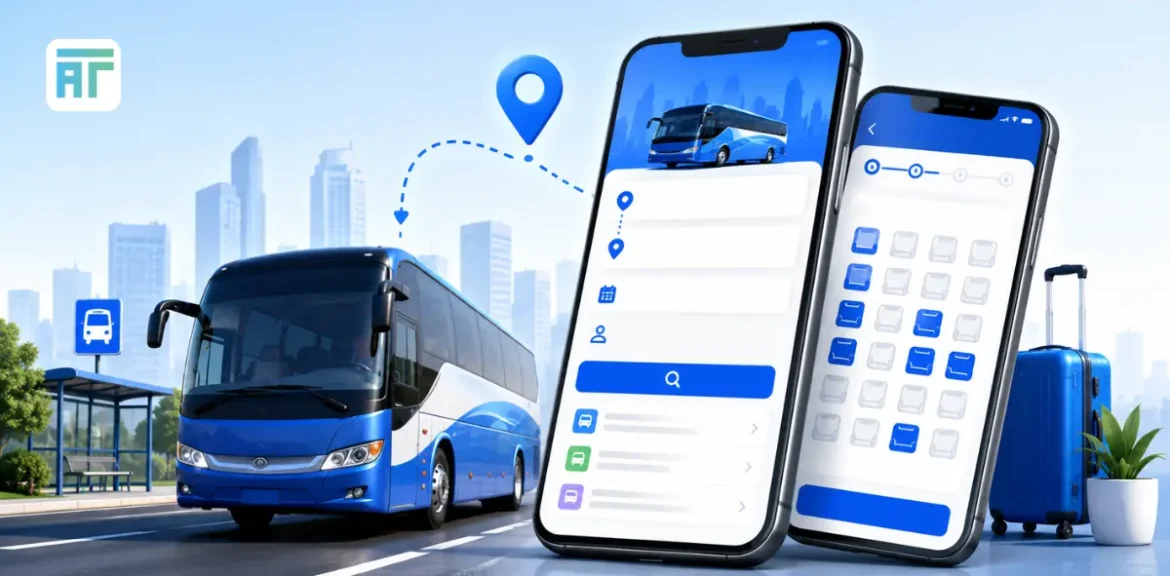

Travelers are increasingly booking tickets through a bus booking app rather than at traditional ticket counters. As intercity and intracity bus travel becomes increasingly common in India, transport operators are also exploring mobile solutions to support route management, booking, payment, and customer communication, thereby providing customers with greater convenience.
One consideration for businesses planning to invest in transport technology is to assess development costs before launching the platforms. Building the best bus booking app is expected to cost between ₹1,50,000 and ₹6,00,000+, depending on the features, platform selection, third-party integrations, and scalability requirements. Astha Technologies assists transportation businesses in building dependable, scalable booking solutions that align with their operational and future growth plans.
What Makes a Bus Booking App Successful?
A winning bus ticket booking app is one that combines convenience, speed, and trustworthiness on a single platform. The users want a neat layout, the ability to book a ticket in a few seconds, to see and pick a seat live, to make a secure payment, to receive the booking confirmation without delay, and to cancel the ticket easily if needed. Being provided with comprehensive route details and schedules is one way travelers can make their decisions without being rushed or confused.
Even when it is the busiest time, the best app for bus booking will still give users an uninterrupted experience. High booking volume should not negatively affect performance, and it should still be easy for the customers to find what they want. Astha Technologies develops booking platforms that are not only scalable but are also designed around the end-user experience. This helps businesses with customer retention, as well as long-term engagement.
Key Factors Affecting Bus Booking App Development Cost
The cost of building a bus booking app varies based on many technical and business factors. Factors such as app complexity, the selected platform, the need for integrations, design, and scalability goals will directly affect the development cost.
1. App Complexity & Feature Requirements
The difficulty level of functions is one of the main factors that determines the price of software development. A simple mobile application with essential features, namely route searching, ticket booking, and user registration. However, standard features often consist of live seat availability, multiple payment methods, and notifications. High-end systems offer dynamic pricing, GPS tracking, loyalty programs, and analytics. A reputable app development company in Noida thoroughly analyzes the app’s needs because each additional feature adds more development work, increases testing, and results in a larger overall project.
2. Type of Bus Booking Platform
Some bus booking platforms have different features and, as a result, their price points vary significantly. If it is merely a single bus operator app, then the main focus is on route management, scheduling, and ticket sales. A marketplace model will require distinct operator dashboards and admin features. Travel aggregator platforms are highly complex because they must integrate multiple operators, routes, pricing schemes, and booking data into a single system. Astha Technologies provides bus businesses with the best solutions for platform selection and structure that meet their current requirements while also supporting future growth.
3. UI/UX Design Complexity
One of the key factors that will affect the user experience and the cost of development is how the bus booking app is designed. The users of such apps are mainly travelers, and they want the app to be as simple as possible. For instance, the seat selection screens should be very simple and easy to use, the route maps can be interactive, and the app should work smoothly on various mobile devices. People with disabilities can be considered if the app has accessibility features to cater to a wider audience. A trusted app development company in Delhi NCR understands that while unique, custom-made designs can create a more engaging, user-friendly interface, they also require more design, testing, and development, which will eventually increase the total project cost.
4. Platform Selection (Android, iOS, Web)
Choosing the platform will impact not only the initial investment you will need to make, but also the future maintenance costs. Many e-transport companies bring their apps to the Android platform first, since it targets a larger audience and the budget is lower. Making the app for iOS as well brings in more users, but the development work gets lengthened. Tools such as Flutter or React Native that run on multiple platforms can reduce costs, since you may only need to write the code once. In addition to building the app, an admin panel on the web is necessary for managing bookings, routes, and the overall operation. A mobile app development company in Gurgaon can suggest the most efficient approach that aligns with the business’s objectives and the available resources.
5. Backend Infrastructure & Database Development
Most of the time, users are unaware of the backend. However, it is responsible for handling almost everything that contributes to a properly functioning online bus booking app. For example, it stores route details, updates seat availability, manages users’ accounts, and ensures that bookings are instantly visible on the platform. Suppose hundreds of travelers want to book seats at the same time; the computer program should be able to process those orders without errors. On the other hand, a backend that is not good enough will cause double bookings, incorrect seat indications, and a very slow system. Therefore, the ability to scale is considered a key factor in the development stage.
6. GPS & Location Tracking Integration
Most passengers like to get a real-time update of their bus location before leaving home. Features like live bus tracking, knowing when the bus will arrive, and seeing the route on the map increase travel comfort and minimize negative feelings due to delays and unexpected events. Usually, those are the kind of features the best bus booking app in India has. But working with GPS services means more coding and testing, plus working with the 3rd-party map service, so overall implementation effort and the project’s price will be higher.
7. Payment Gateway Integration
Generally, the booking process culminates at the payment page. Hence, the slightest hiccup here can result in the booking being abandoned. Prosumers generally look for the flexibility to pay via UPI, credit cards, debit cards, net banking, or digital wallets without inconvenience. Behind the scenes, the system has to verify the authenticity of transactions, handle failed payments, and safeguard financial information. Since payment processing is closely tied to security and reliability, incorporating multiple payment methods often lengthens development time and increases testing costs.
8. Third-Party Integrations
It’s common for passengers to focus only on the results of their online flight booking, i.e., receiving a confirmation message, seeing the route details, and, if something goes wrong, getting support very efficiently. In reality, to deliver all this to passengers, booking systems are integrated with various service providers, such as SMS, email, support, and mapping tools. Automating the connection between different systems can sometimes be error-prone; a minor defect can completely spoil the user experience. Astha Technologies is committed to implementing a combination of third-party systems that work together harmoniously without creating unnecessary operational difficulties.
9. Technology Stack Selection
The chosen technology stack is a major factor in determining not only the end product’s performance but also how easy it will be to maintain and scale in the future. A meticulously planned tech stack will enable the best bus booking app to efficiently manage increasing volumes of bookings and users, as well as other operational requirements.
| Area | Technologies |
| Frontend | Flutter / React Native |
| Backend | Node.js / Laravel |
| Database | MySQL / PostgreSQL |
| Cloud | AWS / Google Cloud |
| Maps | Google Maps API |
| Payments | Razorpay / PayU |
10. Development Team & Location
Who you have on your team is the prime factor determining the cost of your bus ticket booking app. A small team is a good fit for simple features, but larger apps require designers, developers, testers, and project managers to work together. Besides experience and skill, cost is also affected, especially when complex booking workflows or integrations are involved. Indian development companies are a favorite choice of many businesses, as this way they gain access to skilled professionals and quality development at more competitive rates than most international markets.
Essential Features of a Bus Booking App
What makes the best app for bus booking is having features that make booking tickets very easy, increase the efficiency of the operations, and also offer a great experience to the users, operators, and administrators.
Features for Travelers
Travelers want the booking process to be as easy as possible, so the app should offer them registration/ login facility, route searching, seat choosing, online ticket booking, secure payment, ticket booking history, ticket cancellation, push notification, and digital tickets that can be used anytime during the journey.
Features for Bus Operator
Bus operators must have the means to handle route management, schedule changes, bus inventory, fare management, and passenger tracking functionalities. These features help to smoothly run their operations while at the same time decreasing the amount of manual work and making the service error-free.
Admin Features
The admin panel is responsible for the whole platform through user management, operator management, revenue monitoring, producing reports and analytics, and handling support management, thus maintaining good coordination among passengers, operators, and the business operation.
Estimated Bus Booking App Development Cost Breakdown
Typically, development costs are spread through several phases, from planning and designing to testing and deployment. Astha Technologies assists enterprises in knowing their budget breakdown even before the start of development.
| Development Stage | Estimated Cost |
| Planning & Research | ₹25,000 – ₹50,000 |
| UI/UX Design | ₹25,000 – ₹75,000 |
| Frontend Development | ₹40,000 – ₹1,20,000 |
| Backend Development | ₹40,000 – ₹1,50,000 |
| API & Integrations | ₹20,000 – ₹75,000 |
| Testing & QA | ₹20,000 – ₹50,000 |
| Deployment | ₹10,000 – ₹30,000 |
| Total Cost | ₹1,50,000 – ₹6,00,000+ |
Cost Based on Bus Booking App Scope
Ultimately, the amount allocated for the project will be determined largely by the type of platform to be built. Along with progressive features, more manpower, tests, and costly work are required.
| App Type | Features | Cost Range |
| Basic MVP | Ticket booking, route search, and user registration | ₹1,50,000 – ₹2,50,000 |
| Standard App | Payments, notifications, seat selection | ₹2,50,000 – ₹4,50,000 |
| Advanced Platform | GPS tracking, analytics, loyalty programs | ₹4,50,000 – ₹6,00,000+ |
Hidden and Ongoing Costs After a Launch
Launching a bus ticket booking app on the internet is just one step, as there are many other regular expenses that will be incurred even after the deployment. For instance, businesses have to plan for the cost of the cloud hosting, domain, and SSL renewals, SMS services, payment gateway charges, app maintenance, feature upgrades, customer support operations, and the marketing of the business. Such expenses depend on the amount of user traffic, booking volume, and the size of the platform. Typically, companies spend around ₹ 10,000 to ₹ 50,000 per month on these costs, but larger platforms usually require a larger operational budget to ensure smooth performance and quality of service.
Monetization Strategies for Bus Booking Apps
Managing an online bus booking app entails selling tickets only as one aspect of the platform’s operations. Most profitable platforms derive their income from various sources, which help cover running costs and ultimately recoup the initial investment.
- Booking Convenience Fees: One way for many platforms to make money is by imposing a small margin on each ticket. Even though the fee is relatively small, it can become a steady source of income as sales volume rises.
- Commission Per Ticket: Another approach of some businesses is where they get a share of the revenue from every ticket sold on the platform, without directly charging the passengers.
- Featured Operator Listings: Since bus operators always seek ways to be more visible, offering them a chance to get their listing featured prominently can be a source of additional revenue.
- Subscription Plans for Operators: Operators running many routes may use a fee as a payment method to access, among other things, sophisticated tools and features for creating reports and communicating with dedicated accounts.
- Advertising Opportunities: Several travel-related businesses use the platform to promote their services as a source of additional revenue.
- Travel Partnership Revenue: By partnering with hotels, attractions, or travel service providers, people running the platform may receive commissions when users purchase such services through their platform.
How Long Does It Take to Build a Bus Booking App?
Development timelines are influenced by factors such as feature sets, platforms, integrations, and the overall scope of the project. Generally speaking, the more complex a platform is, the more time will be needed for development, testing, and deployment.
| Complexity | Timeline |
| Basic MVP | 1-2 Months |
| Standard App | 2-4 Months |
| Advanced Platform | 4-6 Months |
Core Panels and System Architecture
The best bus booking app in India is designed to feature separate panels that provide dedicated functions for different users. This way, passengers, operators, and administrators are able to carry out their respective tasks effectively and without confusion.
Passenger Panel
The passenger panel is the place where passengers and other users come to interact with the platform. It not only takes care of passenger registration and ticket booking but also manages payment methods, passenger booking history, and notification details. Thus, it provides travelers with the resources they need to make the most of their journeys.
Bus Operator Panel
This particular panel serves as a control panel that helps bus operators allocate vehicles, adjust working hours, and set fares. Besides these, the operators can also keep track of bookings that help them forecast the demand for a service. Keeping all transaction operations controls in a single panel not only simplifies things but also reduces reliance on manual intervention.
Admin Panel
The admin panel or the backend is the window through which the entire platform can be viewed at a glance. It focuses on report management, revenue tracking, overall monitoring, customer service, and system business operations.
How to Reduce Bus Booking App Development Cost
It is a misconception that keeping the development budget low will require lowering the standards. Most businesses start with a Minimum Viable Product (MVP) that primarily targets a few core booking and management functions, rather than rolling out a fully equipped platform all at once. With cross-platform development, coding efforts are almost halved, whereas third-party APIs free us from the obligation to hand-code every feature. Going live in different phases enables businesses to make their financial commitments step by step, and it is through user feedback that they get to know which new functionalities getting the upgrade are really worth the investment.
Is It Profitable to Build a Bus Booking App?
As digital transportation services continue to grow rapidly and more travelers book trips on mobile phones, bus ticketing platforms can still generate new business opportunities. Incomes can be generated through commissions, convenience fees, subscriptions, and partnerships with bus operators, who, in turn, enjoy enhanced booking management and an extended customer base. Still, making a profit requires the platform to have regular users, good service quality, and efficient operations, which, in turn, lead to loyal customers.
Why Choose Astha Technologies for Bus Booking App Development?
The process of creating a booking platform is complex and can’t be reduced to simply implementing a ticket reservation feature. At Astha Technologies, we tailor transport solutions to the business’s actual needs. Whether it is a single operator or a wide network, our expert team always prioritizes functional UI/UX design, secure payment handling, and the development of a robust backend system capable of managing an increasing number of bookings without breakdowns. As a reputable mobile app development company in Chandigarh, we are also focused on service and support to ensure optimal performance of our clients’ platforms as their business operations grow over time.
Conclusion
There can’t be a single price for bus booking app development because each project has different requirements. Features, third-party integrations, platform preferences, and future expansion plans are among the factors that may influence the final budget. The vast majority of companies may anticipate development expenses in the range of ₹1,50,000 to ₹6,00,000+. Sometimes, it is even more logical to launch with a focused MVP and avoid a heavy investment at the beginning. When actual users start using the platform, it becomes possible to add additional features over time. Astha Technologies assists companies in adopting this sensible approach by developing dependable booking solutions.
Ready to Build a Custom AI-Powered App?
12M+
App Downloads
6 Months
Free App Maintance
20+
Industries Served
3 Months
Free Maintenance
×