AI App
 Astrology App
 Beauty Salon App
 Dating App
 E-Learning App
 Education App
 Ecommerce App
 Fintech App
 Food Delivery App
 Gaming App
 Grocery Delivery App
 Healthcare App
 Home Services App
 Hotel Booking App
 Ludo Game App
 Media Entertainment App
 OTT App
 Political App
 Pet Care App
 Real Estate App
 Taxi Booking App
 Travel App

More and more people are shopping on their phones, making ecommerce apps a must-have for businesses that want to remain competitive in this very digital world of ours. Since customers want instant, flawless, and secure shopping experiences they can access anytime, anywhere, from any device, businesses have begun to see app development as a key part of their plans to seize opportunities in the online market or even just strengthen their position there. When it comes to changing consumer behavior from a business perspective, developing an app can be the very thing that makes the difference in customer engagement and company sales, whether the company is newly founded or well established.
The total e-commerce app development cost is influenced by different factors such as features, platform choice, and scalability capabilities, among others. Typically, creating an e-commerce app may cost from ₹3,00,000 to ₹15,00,000+, depending on the level of complexity and features required. At Astha Technologies, the main emphasis is on creating scalable, affordable solutions that support the business’s objectives. Selecting the appropriate development strategy is what really helps with budget management and, at the same time, ensures long-term growth and performance.
What Makes an E-Commerce App Popular?
The key to an e-commerce app’s success lies in its simple and intuitive navigation that enables users to browse products effortlessly, or they may get confused. Fast load times and smooth app performance are critical for keeping users engaged and preventing abandonment during checkout. Having secure payment options is another very important element in gaining users’ trust that will predispose them to fulfilling the transactions. A trustworthy mobile app development company in Noida specializes in bringing to market apps that integrate usability, speed, and security.
By providing personalized recommendations, user experience can be enhanced by showing them relevant products, leading to greater engagement and higher conversion rates. Besides, scalability ensures the application works effectively even during a large influx of users.
Key Factors Influencing the Cost of E-Commerce App Development
There are numerous factors that determine the e-commerce mobile app development cost, including the complexity of the app, the features provided, the selection of platforms, UI/UX design, backend infrastructure, integrations, and the skills and location of the development team.
1. App Complexity & Features
The degree of complexity of an app is a key factor in deciding the e-commerce Android app development cost, since simple ones with only essential features like product displaying, shopping cart, and checkout need less development work. Whereas sophisticated applications featuring user-tailored suggestions, live order monitoring, and deeper user engagement entail more hours, workforce, and specialized knowledge, thus leading to a much higher overall cost.
2. Type of E-Commerce App
The type of app you decide upon affects the e-commerce app development cost in India directly. A single vendor app like Nike, for instance, is quite simple because such an app only deals with products of one business; building it is not only easier but also affordable. Conversely, a marketplace app like Amazon, in addition to dealing with several sellers, product listings, commissions, user flows, etc., would also have quite high backend complexity. Subscription-based apps add further complication with recurring billing and account management, thereby increasing both the time and cost involved in development.
3. UI/UX Design
UI/UX design is very important for user interaction with an e-commerce app and is directly linked to conversion rates. A neat and easy-to-use interface helps users navigate through product listings, add items to the cart, and purchase them without any difficulty. A best mobile app development company in Delhi will mainly work on making the navigation seamless, the product pages well-organized, and the checkout process very easy. Even though simple templates are less expensive, bespoke design provides a nicer experience for users, but also raises the cost of development.
4. Platform Selection (Android, iOS, Web)
Deciding on which platform to use is incredibly important in terms of development budget and planning for future growth. For example, a lot of companies choose to launch on Android first because they can reach more people while still keeping the budget small. Moreover, a trustworthy mobile app development company in Gurgaon usually advises a stepped strategy to save costs and have smoother growth.
- Launching on Android only initially is a great way to bring down the cost of development and also to market the app more quickly
- Using a cross-platform development kit like Flutter is a budget-saving option that allows you to build apps for different platforms
- Going to iOS later is a way to increase the app’s users once the product is confirmed by the market
5. Backend Development & Server Setup
Backend development is a key factor when it comes to calculating the e-commerce app development cost, as it is the engine running the entire system that, though invisible, users greatly depend on. A good backend is crucial for the uninterrupted working of the platform, precise processing of data, and delivering a faultless and pleasant shopping experience without any waiting time or hiccups.
- Managing products and inventories for regular and systematic updates of listings
- Tracking of orders system for providing the users with real-time information and enhancing their experience
- An administrative panel for overseeing users, sales, and overall business operations
- Setting up the servers for achieving high speed, getting ready to handle increasing traffic, and having the least time out of service
6. Third-Party Integrations
With third-party integrations, an e-commerce app becomes truly functional for real-world uses because the main features like payments, delivery, and user interaction rely on external systems. Payment processors like Razorpay and Stripe take care of safe payment transactions, and using shipping APIs, you can easily get an order’s status and also arrange deliveries without human intervention. Services for sending notifications and collecting analytics not only maintain user interest but also provide valuable performance insights. Astha Technologies aims to integrate these services so the app remains stable and scales easily with increasing usage.
7. Technology Stack for E-Commerce Apps
The technology stack you choose significantly determines the e-commerce mobile app development cost in India, as it affects the ease of building, scaling, and maintaining the app in the future. Most of the teams prefer tools that are trustworthy and don’t become a bottleneck in the development process as the number of users increases. For instance, Flutter or React Native allow mobile app developers to develop apps rapidly, whereas Node.js or Firebase help in building a lightweight and responsive backend.
| Area | Tools |
| Frontend | Flutter / React Native |
| Backend | Node.js / Firebase |
| Database | MongoDB / Firestore |
| Cloud | AWS / Google Cloud |
| Payments | Razorpay / Stripe |
8. Development Team & Location
Your choice of a development team will affect your budget considerably. For instance, hiring an e-commerce mobile app development company in India can be a good choice, as hourly rates there typically range from ₹1,000 to ₹3,500 depending on experience and expertise. Senior developers may charge a higher rate but can produce higher-quality work in less time, thereby keeping overall costs similar.
The team size is also an important factor for estimating the costs. Bigger teams can help developers finish the project faster, but the costs will be higher. A team with fewer members focused on a single project is usually sufficient to build and launch the first version. Striking the right balance between the two scenarios is what will help you to keep costs in check without compromising your progress and workflow.
9. Advanced Features
By adding advanced features, an e-commerce app can get a little touch of magic, but it will also require more developer effort and budget. For example, product recommendations require tracking user behavior and suggesting relevant items. This means a lot of extra work on the backend. In the same way, chat support needs a real-time messaging setup; on the other hand, wishlists and offers involve storing user preferences and managing discounts or campaigns. A trusted mobile app development company in Agra advises that such features should only be considered once the basic version is definite.
On top of that, APIs need to be used, databases handled, and testing conducted constantly to ensure everything is working properly. The introduction of additional advanced features makes the app not only more difficult to manage but also to scale, and this directly leads to an increase in both the development costs and the timeline.
10. Multi-Language Support
Offering multi-language support enables an e-commerce platform to tap into a broader consumer base, which is quite a diverse one in a country like India. An e-commerce app development company generally rolls out its product in English and Hindi to begin with and then incorporates other local languages depending on user preference. It is a far cry from simple translation since the UI text, layouts, and fonts must be adapted and tested for each language. As the number of languages grows, so do development and testing efforts, potentially increasing the overall cost and duration of the project.
Estimated cost breakdown to develop an e-commerce app
To sum up, the e-commerce app development cost essentially derives from various stages that go far beyond just the coding. Planning, designing, developing, and testing all contribute, so the entire budget can differ quite significantly.
| Development Stage | Estimated Cost |
| Planning & Research | ₹50,000 – ₹1,50,000 |
| UI/UX Design | ₹1,00,000 – ₹3,00,000 |
| Frontend Development | ₹1,50,000 – ₹4,00,000 |
| Backend Development | ₹1,50,000 – ₹5,00,000 |
| Integrations | ₹50,000 – ₹2,00,000 |
| Testing & QA | ₹50,000 – ₹1,50,000 |
| Deployment | ₹25,000 – ₹75,000 |
| Total Cost | ₹3,00,000 – ₹15,00,000+ |
Cost Based on App Scope
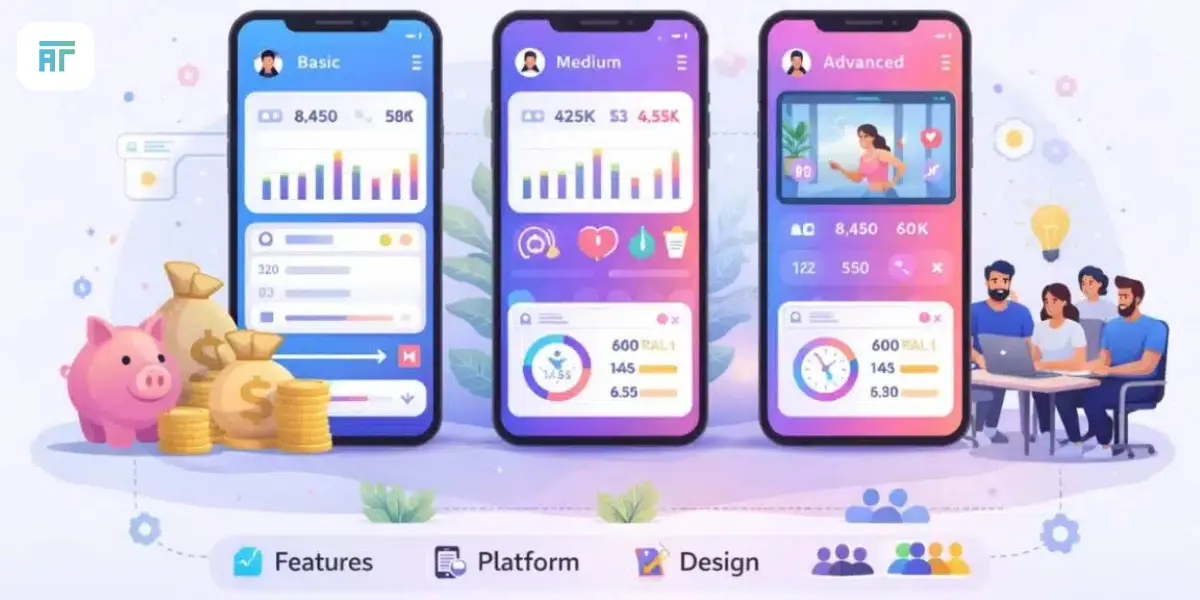
E-commerce mobile app development cost depends on how sophisticated your app is. Typically, Astha Technologies advises launching with minimal features and adding more as the business expands.
| Version Type | Features | Cost Range |
| Basic MVP | Product listing, cart, checkout | ₹3,00,000 – ₹5,00,000 |
| Standard App | Payments, user accounts, tracking | ₹5,00,000 – ₹10,00,000 |
| Advanced App | Multi-vendor, offers, analytics | ₹10,00,000 – ₹15,00,000+ |
Post-Launch, Hidden & Ongoing Costs
After the launch, the e-commerce Android app development cost doesn’t end here, since you need to keep funding the app regularly to keep it stable, updated, and hold a competitive edge. Depending on the traffic, server hosting may run from ₹5,000 to ₹50,000 per month. Maintenance cost normally lies around ₹30,000 to ₹1,50, 000 per month. Besides that, every transaction is subject to payment gateway charges, and marketing is a must to both attract and keep users. Updates of new features and improvements of existing ones also take place regularly in order to keep the app relevant, as well as to ensure a smooth and trouble-free run.
Monetization Strategies for E-Commerce Apps
Recovering the e-commerce app development cost in India will be possible if you get the right combination of revenue streams that continue to increase as your app grows. Instead of depending on one source, most e-commerce apps mix several strategies to ensure a stable income rise over time. At Astha Technologies, we believe that monetization should be planned to not only generate revenue but also maintain an excellent user experience.
- Product Sales Margins: Set effective prices and margins to achieve direct profit on every product sold.
- Marketplace Commission: Sellers can be charged a percentage fee on the sale made through your e-commerce platform.
- Subscription Plans: Monthly or annual memberships can be introduced with perks like free delivery, members-only discounts, and pre-release of items.
- Ads & Featured Listings: Get paid for promoting products or sellers to the lowest-tier users, incurring paid placement within the app.
- Premium Seller Features: Besides the basic seller tools, the advanced ones will include different types of analytics, visibility enhancers, and priority listings.
How Long Does It Take to Develop an E-Commerce App?
The timeline depends on features and complexity, which also affects e-commerce mobile app development cost in India, as higher-level apps need more development, testing, and iterations before launch.
| Complexity | Timeline |
| Basic | 2 – 3 months |
| Standard | 3 – 5 months |
| Advanced | 5 – 8 months |
Essential Panels & Core Feature Architecture
A properly arranged hag with the help of an e-commerce application development company has separate panels for managing customer interactions, business activities, and seller operations, so the entire system is running fine and is under control in an efficient way.
User Panel
The user panel is the app’s interface through which buyers communicate with the app, visiting it daily. It gives users an opportunity to find the products they want, add things to their basket, carry out the checkout process, and comfortably track their orders without any worry.
Admin Panel
Admin Panel is the one that manages the entire e-commerce app. It gives the business the power to manage products, track orders, check revenue, and control users, thus improving operational efficiency and business effectiveness.
Vendor Panel
A vendor panel is a very useful feature for apps that operate as marketplaces and have more than one seller. This panel is there for the sellers to handle their products, monitor their sales, and efficiently manage their inventory on the platform.
How to Reduce E-Commerce App Development Cost
Controlling e-commerce app development cost can be quite simple if you are inclined only to build what is necessary at the early stages and add features gradually as the business grows. A viable plan will enable you to limit your expenditure unnecessarily and still come up with a functional and scalable product.
A good approach is to develop an MVP first, which will give you a working product with the main features and allow you to test users’ responses before further investing. Concentrating on Android initially is a smart move if you want to cut down on your initial expenses and access a larger market sooner. Leveraging cross-platform frameworks, you can design one app that works on various platforms, thus saving time and money. Besides that, if you are looking at fast development and low costs, using ready-to-use platforms such as Shopify and Magento is undoubtedly a tempting option. Do not pack your app with features the first time; instead, you can introduce them progressively based on your user feedback.
Is It Profitable to Build an E-Commerce App?
Developing an e-commerce app could be very profitable, especially since online shopping is getting adopted so fast in India. The possibility of loyal customers leads to stable long-term income for companies. An excellent app with the desired features and competitive pricing can yield good returns. Nevertheless, sustaining the business requires consistently offering customers a positive experience and investing in effective marketing to attract and retain customers.
Why Choose Astha Technologies for E-Commerce App Development
Partnering with the right developer will significantly impact the long-term success of your e-commerce app. Astha Technologies is known for developing apps that are not only stable and scalable but also capable of growth without any performance issues. Taking a robust technical approach can reduce the risk of issues throughout the software development lifecycle, and the end-to-end execution will also be smoother.
In addition, the team helps accelerate the release phase by maintaining a modern, effective development process free of unnecessary hold-ups. Besides that, regular support, upgrades, and enhancements will keep the app up-to-date with changing user preferences and market trends, thereby making it much easier for the business to grow in the future.
Conclusion
The major determining factor in e-commerce app development cost is essentially a question of how far you want to take your app. A very basic version with only the main features won’t cost much; however, if you add more complex features, the price will definitely go up. Going for an MVP is a more reasonable step, since at this point you can check users’ reactions and decide whether to invest more.
Equally important is the team you choose to build it with. Astha Technologies follows a gradual approach, helping you develop a clear plan and preventing overbuilding at the early stage. If an e-commerce app is on your mind, it is advisable to keep things simple at first, be focused, and develop the product as your customer base increases.
Ready to Build a Custom AI-Powered App?
12M+
App Downloads
6 Months
Free App Maintance
20+
Industries Served
3 Months
Free Maintenance
×