AI App
 Astrology App
 Beauty Salon App
 Dating App
 E-Learning App
 Education App
 Ecommerce App
 Fintech App
 Food Delivery App
 Gaming App
 Grocery Delivery App
 Healthcare App
 Home Services App
 Hotel Booking App
 Ludo Game App
 Media Entertainment App
 OTT App
 Political App
 Pet Care App
 Real Estate App
 Taxi Booking App
 Travel App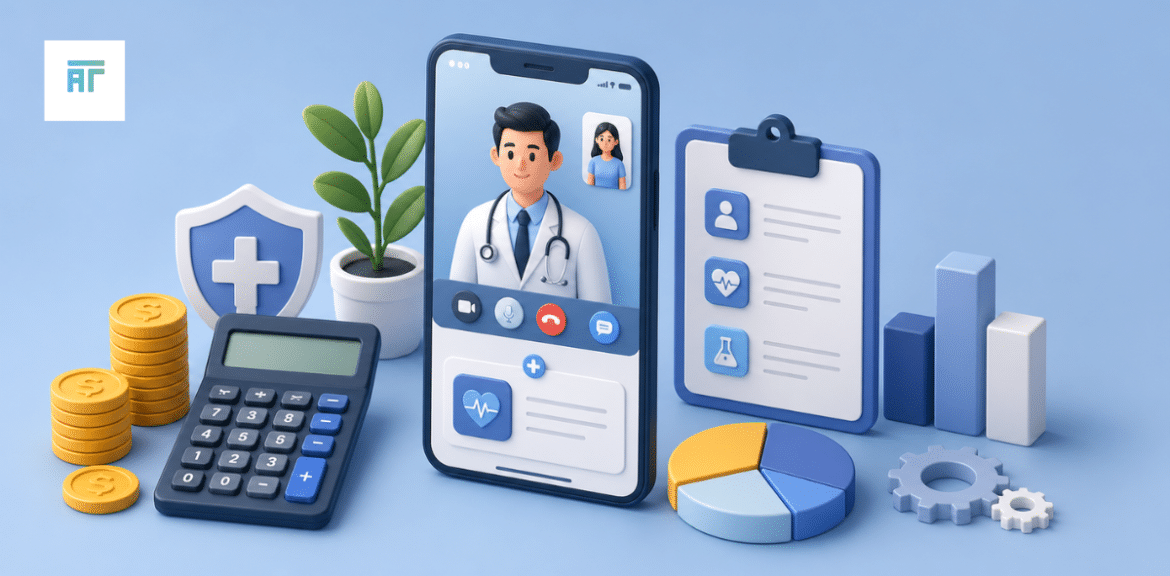

The healthcare industry has drastically changed over the years. Currently, clinic visits are not the only option for patients, as a majority now opt to see physicians online for faster, more convenient treatment. It is only after the COVID-19 outbreak that telemedicine consultations became a requirement rather than a decision. At present, customers expect detention scheduling to be very easy, consultations to be speedy, and communication to be secure and without delay. For this very reason, many healthcare providers have collaborated with a reliable telemedicine app development company to build innovative, user-friendly solutions.
Given the growing need, telemedicine applications are becoming solid business investments for healthcare firms looking to expand their market and enhance the patient experience. The development of a telemedicine app can cost between ₹6,00,000 and ₹ 15,00,000+, or even more, depending on the feature set, regulatory requirements, and the platform’s scalability. Apart from the budget, selecting the right development approach is equally important, as it has an immediate impact on the product’s long-term performance. Astha Technologies is dedicated to delivering robust, scalable solutions that can handle increased user demand.
What Makes a Telemedicine App Successful?
A telemedicine app only works well when it feels easy to use for both patients and doctors. Since most users aren’t highly tech-savvy, it’s crucial to have a simple, intuitive user interface for easy navigation. Activities like scheduling a doctor, entering a consultation room, and getting medical records should be done without any confusion or delay. A good mobile app development company in Delhi NCR is one that believes user-friendly design is key to reducing friction and increasing user satisfaction.
Telemedicine applications primarily aim to enhance remote patient-doctor communication, but ensuring the security of highly sensitive medical data is one of their main challenges. Hence, features like video and audio calls secured with encryption, secure logins, and in line with the healthcare regulatory frameworks are what patients build their trust on. Additionally, telemedicine apps must be highly responsive and rarely experience technical failures to prevent interruptions during patient-physician video meetings. At the same time, the addition of indispensable features like e-prescriptions, health records, and online payment systems makes the app more user-friendly. Lastly, the use of well-thought-out, scalable architecture ensured the app could support an increasing number of users without hampering performance.
Key Factors Influencing Telemedicine App Development Cost
The telemedicine app development cost largely depends on various practical elements such as the feature selection, the platform choice, the level of design quality, the backend setup, the number of integrations, and what kind of regulatory compliance is required, besides the experience and whereabouts of the development team that will be doing the work.
1. App Complexity & Core Features
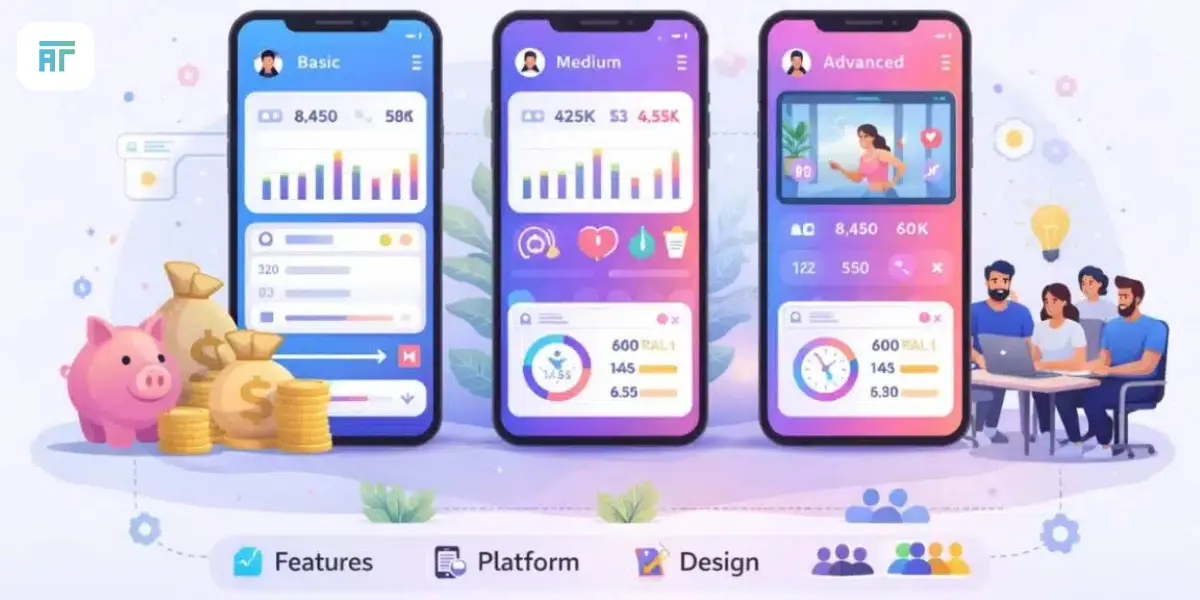
Features play a big part in deciding the price of a telemedicine app. Most of the time, basic apps just have appointment booking and doctor listings, but mid-range platforms also offer video consultations, chat, and prescriptions. If you want a very advanced telemedicine app with AI diagnostics, wearable integration, and EHR systems, it involves a lot of work, and that’s why telemedicine app development services will cost you much more as you increase complexity.
2. Type of Telemedicine App
Choosing the type of telemedicine app shapes the development complexity as well as the cost level. Apps supporting doctor-patient consultation are a lot simpler as they mainly revolve around the core functions of appointment booking and communications. On the other hand, healthcare platforms and multi-specialty marketplace apps will require sophisticated systems that can handle multiple doctors, users, and workflows simultaneously. Besides that, on-demand doctor app features must include real-time availability and quick matching, whereas chronic care management app features involve continuous monitoring, data tracking, and long-term user engagement, so these are much more complex and costly to develop.
3. UI/UX Design
The user interface and user experience design significantly influence the level of confusion when patients and doctors use the app. Making the navigation patient-friendly is a must for all age groups, especially the elderly or less tech-savvy users, who will require a straightforward and clear interface. Likewise, the doctor’s panel should be designed such that it is easy and effective to use, even during the consultation time. Besides, adding accessibility features will make the app more user-friendly. On the other hand, opting for custom designs for the app will definitely provide a better user experience, but at the same time, they are more expensive than templates. Therefore, expert telemedicine app developers are always looking for ways of getting the best of the two worlds, meeting the user’s needs while staying within the budget limit.
4. Platform Selection (Android, iOS, Web)
Picking the right platform will impact your initial budget as well as long-term scalability. A lot of companies start with Android as it’s cheaper and can reach a bigger audience; then they gradually expand based on the demand of their users. A trusted app development company in Noida suggests a phased approach to strike a balance between cost efficiency and future expansion.
- Developing for Android first significantly saves initial development expenses and gets the product out faster.
- With cross-platform frameworks like Flutter or React Native, one can easily develop for both platforms with just one code base.
- Switching to iOS at a later stage allows you to secure high-end users who are probably very much interested in the app.
- An online platform is a must for the efficient handling of users, appointments, and operations by the admin and doctors.
5. Backend Development & Infrastructure
Even though users don’t see a telemedicine app’s backend, it is where most of the heavy lifting is done. It manages patient records, doctor information, and appointments, and keeps everything running smoothly during live consultations. If the backend is not strong, the overall experience for users is like the app being unreliable. A expert mobile app development company in Gurgaon usually addresses the challenge of building a stable system even when the number of users grows dramatically.
- Securing patient and doctor information so that it is never lost or tangled up.
- Dealing with the appointment scheduling, including finding the right slots and sending reminders.
- Ensuring smooth video consultations without lag or interruptions.
- Keeping medical records such as prescriptions and lab reports at a single click.
- Building a system that supports more users without becoming slow or crashing.
6. Third-Party Integrations
There’s simply no way for a telemedicine app to operate independently without the use of external services for its essential functionalities. For instance, video communication, notifications, and payments are functionalities that rely on third-party tools to function effectively. A good example would be payment gates for the collection of consultation fees; on the other hand, tools like WebRTC or Zoom SDK are for video calls. Also, notifications via SMS and email keep patients informed of their appointments, while EHR or EMR systems manage patient records. Pharmacy and lab integration make the experience more complete, too. A reliable healthcare app development company would ensure that all these third-party integrations are not only seamless but also that they do not disrupt the app workflow.
7. Compliance & Security Requirements
Telemedicine apps are extremely sensitive to security concerns because they handle patients’ personal health data. From patient information to the consultation record, every bit of data should be kept and shared securely. This implies the use of proper encryption, safe servers, and secure communication channels. If the app is targeted at a larger audience, it shall also be subject to standards such as HIPAA compliance, in addition to Indian healthcare data guidelines. Robust login mechanisms significantly contribute to securing accounts.
Satisfying all these requirements will inevitably lead to a rise in expenses, as compliance is an essential aspect that cannot be overlooked or taken lightly. The process of implementation and the time of development would require extra manpower and effort, apart from testing and post-implementation monitoring. Astha Technologies, in its effort to develop secure systems, does not complicate the application for the user in any manner.
8. Technology Stack
The choice of a technology stack decides the efficiency of your app when the user base expands. Improper configuration leaves room for problems such as slow response time and app crashes. A mobile app development company in Chennai focuses on selecting high-quality, easy-to-maintain, and growth-compatible tools so that changes don’t have to be made very often.
| Area | Tools |
| Frontend | Flutter / React Native |
| Backend | Node.js / Firebase |
| Database | MongoDB / PostgreSQL |
| Cloud | AWS / Google Cloud |
| Video Tech | WebRTC |
9. Development Team & Location
The amount you spend on your app development company in Lucknow is also affected by who designs the app for you and their location. Usually, developers in India can offer a cheaper solution, with their hourly rates varying from ₹ 1,000 to ₹ 3,500+, depending on their skills. Having a small team can be a good way to limit expenses, but it will take longer, while a big team rushes the work for a significantly higher price. Also, developers with a high level of expertise have probably fewer workarounds to do a great and stable telemedicine app for doctors, which can go on the market without any problem.
10. Advanced Features
Incorporating advanced features in a way can make the app more helpful and usable. However, it indirectly leads to a rise in effort and cost. Features such as AI symptom checkers, e-prescriptions, health dashboards, wearable integration, and multi-language support do entail additional work not only on the frontend but also on the backend. Such features are, generally, not essential for the first version and can be added later on when the app is sufficiently mature. A telemedicine app development company with good experience and credentials ensures that such features are introduced one by one so that the app remains stable and, at the same time, is easy to manage.
Estimated Cost Breakdown to Develop a Telemedicine App
The telemedicine app development cost spans several stages, not just writing code. Planning, design, development, integration, and testing are all elements that may lead to the final sum, depending on the extent of the work.
| Development Stage | Estimated Cost |
| Planning & Research | ₹75,000 – ₹2,00,000 |
| UI/UX Design | ₹1,50,000 – ₹3,00,000 |
| Frontend Development | ₹2,00,000 – ₹4,00,000 |
| Backend Development | ₹2,00,000 – ₹5,00,000 |
| Integrations | ₹1,00,000 – ₹2,50,000 |
| Testing & QA | ₹75,000 – ₹1,50,000 |
| Deployment | ₹50,000 – ₹1,00,000 |
| Total Cost | ₹6,00,000 – ₹15,00,000+ |
Cost Based on App Scope
The expense depends on the complexity level of your app. Telemedicine app development services are often scaled in phases.
| Version Type | Features | Cost Range |
| Basic MVP | Appointment booking, doctor listing, basic chat | ₹6,00,000 – ₹8,00,000 |
| Standard App | Video consultations, payments, user accounts, prescriptions | ₹8,00,000 – ₹12,00,000 |
| Advanced App | Multi-doctor platform, AI features, analytics, integrations | ₹12,00,000 – ₹15,00,000+ |
Post-Launch, Hidden & Ongoing Costs
Launching the app means you’ve only run the first lap, because the real spending happens after that. To have your app online and running, you need server hosting that will cost you from ₹10,000 to ₹60,000 per month, depending on the level of usage. Maintenance is another regular monthly expense that would take you from ₹40,000 to ₹1,50,000. Besides that, there are security updates, third-party API charges for video, payment, etc., and ongoing marketing to attract users. Eventually, you will also need to update the app with new features to keep your business going effectively.
Monetization Strategies for Telemedicine Apps
It is not a big deal to make money from a telemedicine app, but there is no single source. Most apps mix a few methods, so the revenue will be stable even when the number of users increases. Astha Technologies makes apps with this intention in mind right from the beginning. Good telemedicine app developers do not treat monetization as a secondary concern; they plan it early so it fits naturally into the app.
- Consultation Fees (Per Session): This could be a very basic model where users pay a fee each time they communicate with a doctor.
- Subscription Plans: Users pay on a monthly basis and get some benefits, such as reduced rates or faster access.
- Commission from Doctors: The platform receives a percentage of each consultation the doctor has with a patient.
- Medicine Delivery Partnerships: Revenue comes from sales made through the pharmacies with which the platform has partnerships.
- Paid Premium Features: Advanced capabilities are available to those users who pay an extra amount.
- Ads (Limited & Healthcare-Friendly): Small, relevant ads can be a source of additional revenue without disturbing users too much.
How Long Does It Take to Develop a Telemedicine App?
The truth is, there is no definite time frame for this. It is dependent on what you are aiming to build. If the app is a basic one, it certainly takes less time. On the other hand, if you add more features, that can really slow the process down pretty significantly. A healthcare app development company plans things step by step so delays don’t pile up later.
| Complexity | Timeline |
| Basic | 2 – 3 months |
| Standard | 3 – 5 months |
| Advanced | 5 – 8 months |
Essential Panels & Core Feature Architecture
Telemedicine applications perform more efficiently if the workflows are properly segregated. Astha Technologies develops applications with distinct panels so that each type of user is well aware of the location and actions to be performed.
Patient Panel
A patient panel is the place where a patient can perform activities such as booking appointments and joining consultations. Furthermore, it enables them to view their prescriptions as well as maintain a record of their medical history without going through multiple steps.
Doctor Panel
Doctor panel is the tool through which doctors can keep order in their work schedule. Here, they can make appointments, communicate with patients, check files, and prescribe medicine without having to switch between tools or screens.
Admin Panel
The admin panel operates the whole system from a background perspective. It is the interface through which users are managed, activities are monitored, revenues are tracked, and security and compliance are ensured.
How to Reduce Telemedicine App Development Cost
Keeping costs under control starts with not trying to build everything at once. Starting small with a Minimum Viable Product (MVP) lets you test whether the concept works with the real audience before you spend a lot of money. Concentrating on just the main features initially not only makes the development simpler but also prevents unnecessary spending. Testing the waters with Android first is another way to keep the initial price down while reaching a larger audience faster.
Developing cross-platform code is one option that can save a lot of time and effort by letting developers work on a single codebase across multiple platforms. Using ready-made APIs rather than starting from scratch is another way to get rid of the up-front development time. Once your app is out there, you can continuously expand its functionality by gathering users’ feedback on which features they want most.
Is It Profitable to Build a Telemedicine App?
As a matter of fact, telemedicine apps can be a profitable business given the rapid expansion of digital healthcare in India and people’s growing acceptance of online doctor consultations. Besides, the demand is so high even in Tier 2 and 3 cities that opportunities are further expanded. Along with generating revenue through consultations and subscriptions, these apps can become a source of long-term incremental revenue. On the other hand, true profit can only be made by earning users’ trust, providing top-quality services consistently, and keeping users engaged for a long time.
Why Choose Astha Technologies for Telemedicine App Development
At Astha Technologies, we develop telemedicine applications that are not only reliable and secure but also scalable to match the user growth in a hassle-free manner. Our team adopts a pragmatic approach, helping you get started with the essential features rather than overbuilding the product from day one. We maintain transparency and control throughout the process, from developing the app concept to providing support after launch. We emphasize efficient app performance, data security, and an intuitive, smooth user journey so users have a reliable app without any extra hassles.
Conclusion
Ultimately, the cost of developing a telemedicine app depends entirely on the extent of its functionality. Adding more features not only requires more development time but also increases the price, so delivering a basic MVP first is usually the most reasonable choice for most companies. Approximately ₹6L to ₹15L+ would be a reasonable range for telemedicine app development. When developing a telemedicine app for doctors, great focus should be placed on security, usability, and compliance from the very beginning. Astha Technologies can help you build something that works now and still holds up as you grow.
Ready to Build a Custom AI-Powered App?
12M+
App Downloads
6 Months
Free App Maintance
20+
Industries Served
3 Months
Free Maintenance
×