AI App
 Astrology App
 Beauty Salon App
 Dating App
 E-Learning App
 Education App
 Ecommerce App
 Fintech App
 Food Delivery App
 Gaming App
 Grocery Delivery App
 Healthcare App
 Home Services App
 Hotel Booking App
 Ludo Game App
 Media Entertainment App
 OTT App
 Political App
 Pet Care App
 Real Estate App
 Taxi Booking App
 Travel App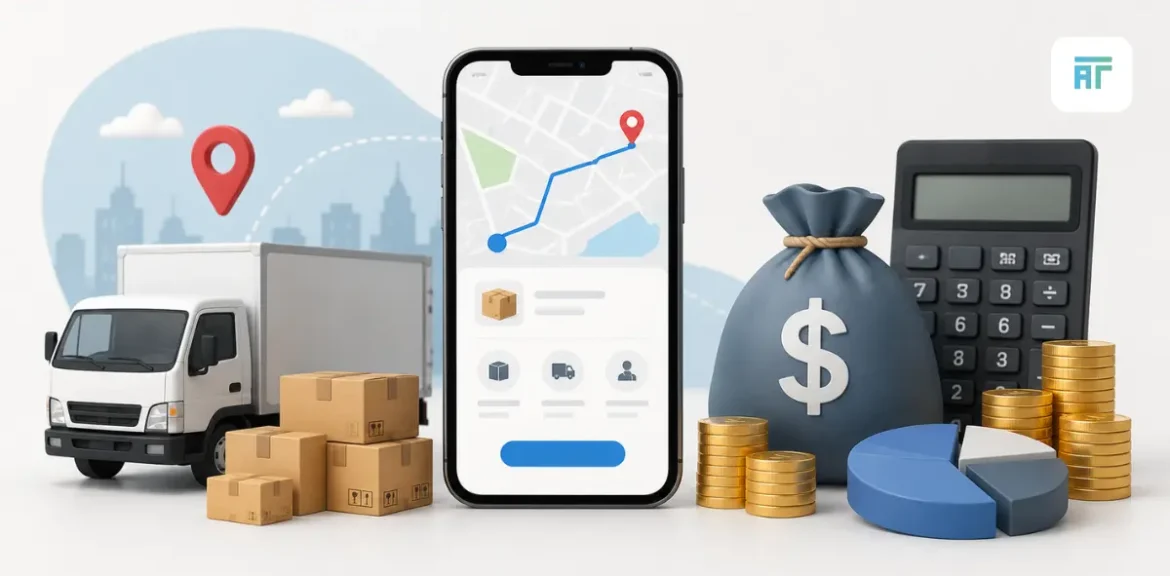

Across India, fast-growing parcel and hyperlocal delivery services have reshaped the country’s parcel delivery system. Increasingly, both consumers and businesses depend on an online parcel delivery app for their same-day, scheduled, and on-demand deliveries. From local shops to e-commerce businesses, delivery platforms have not only added convenience to customers’ lives but also enhanced operational efficiency and enabled faster order fulfillment, making them indispensable for businesses.
The budget for a parcel delivery app generally ranges from ₹1,50,000 to ₹11,00,000+ the exact figure depends on the app’s features, platform choices, third-party integrations, and the business’s scale. Since courier, logistics, and hyperlocal delivery services remain in constant demand, several businesses have gone digital through delivery platforms. With a full-fledged team of domain experts, Astha Technologies is committed to providing application development services that enable businesses to stay a step ahead of the competition without compromising on security, scalability, or user-friendliness.
What Makes a Parcel Delivery App Successful?
An effective instant parcel delivery app offers an easy way for users to book, track, and control their shipments. Quick order processing, live tracking, secure payment methods, and dependable delivery partners are among the factors that contribute to a pleasant and uninterrupted experience. Besides this, speeding up operations and enhancing customer satisfaction result from those deliveries being, in fact, done accurately and on time.
The best parcel delivery app is the one that combines an intuitive design with robust technology capable of scaling delivery operations. Live alerts, ordering and delivery scheduling, and route optimization are features that enhance the app’s performance. Astha Technologies aims to deliver great user experiences through solutions that also support long-term business growth.
Different kinds of parcel delivery apps
The need for a parcel delivery app in Bangalore has significantly increased as companies want to deliver their products faster and more efficiently. Various types of apps cater to different delivery needs, which in turn affects the app’s features, development time, and total cost.
Local Courier Delivery Apps
These apps are meant for deliveries in a city or its surroundings only. They can be very helpful in organizing courier businesses’ operations, such as scheduling pickups and deliveries and tracking shipments.
Hyperlocal Delivery Apps
Hyperlocal delivery apps are mainly used to deliver goods over short distances from local stores, pharmacies, retailers, etc. Their primary feature is ensuring the delivery time is very short.
Logistics Aggregator Platforms
With these platforms, a user no longer needs to install several apps for various couriers. They can compare different services offered, make a booking, and even track their shipment all through one app.
Business Parcel Management Apps
Parcel delivery apps for business use allow businesses to handle large numbers of deliveries, control their shipments, and streamline logistics efficiently through a dashboard.
On-Demand Delivery Apps
With these apps delivering on demand, users can plan package collection at once and connect with the delivery partner available for that task.
Key Factors Affecting Parcel Delivery App Development Cost
Developing the best parcel delivery app in India is no small task and requires a great deal of planning, as many technical, operational, and business requirements significantly impact the overall software development cost.
1. App Complexity & Feature Requirements
Installation of a delivery app with parcel booking, status update, and very basic tracking is significantly cheaper than a system designed for large-scale operations. Adding in features like live driver tracking, automated dispatching, route planning, and business dashboards will require additional development. Many businesses that are in the process of releasing a parcel delivery app in Noida start with the core functionalities and gradually enhance their platform as the delivery volumes increase.
2. Platform Selection
Which platform to choose directly affects your development spending. Native Android and iOS apps require different development efforts, whereas a web dashboard is a useful support for management functions. Many businesses work with a mobile app development company in Noida to build cross-platform solutions powered by Flutter or React Native, thereby minimizing not only development time but also overall costs.
3. UI/UX Design Complexity
Giving the users a smooth delivery experience is what a well-designed interface does. An appropriate customer journey will make the parcel booking and tracking very easy, while delivery partners must be given the facility to get the directions and live updates of the orders as quickly as possible. Admin workflows should enable operations to be carried out efficiently, and custom interfaces will require additional design effort. Most of the companies building a parcel delivery app in Chennai will be focusing on the intuitive human experiences to ensure user engagement and retention.
4. Real-Time GPS Tracking Integration
Real-time GPS tracking is highly favored as a feature for a delivery platform because it allows both the customers and the businesses to have full knowledge of every shipment. They can follow the location at every moment, track the route, get the most accurate ETA, and receive live updates on delivery at any time of the journey. mobile app development company in Delhi NCR, Astha Technologies, offers advanced tracking system integration that helps businesses deliver their products more efficiently, reduce delays, and improve the overall user experience.
5. Backend Infrastructure
Backend is the heart that keeps your delivery platform alive and well. It is constantly working out the details of orders to determine what will be delivered and when, ensuring the delivery procedure is followed, keeping customer and delivery data safe and accessible, and coping with higher transaction volumes. If businesses desire to develop the best parcel delivery app in Bangalore, they must have a scalable backend that can handle a rise in orders efficiently without compromising the speed or quality of delivery.
6. Third-Party Integrations
Third-party integrations contribute indispensable features to a delivery platform without having to build all from the ground up. Google Maps for navigation, payment gateways for transactions, SMS services for alerts, push notifications for delivery updates, and analytics tools for performance tracking are a few examples of services that enhance the customer experience. Companies introducing a parcel delivery app in Mumbai usually rely on these integrations to make their operations more efficient, whereas Astha Technologies guarantees that they are well integrated across the platform.
7. Security Features
Users, in fact, entrust a delivery app with personal details, full addresses, and even payment info; hence, security should not be an afterthought. Secure logins, OTP-based verification, encrypted data storage, and fraud detection systems are features that contribute to securing accounts and transactions. Business owners planning to develop a parcel delivery app in Hyderabad must consider strong security measures to not only thwart fake bookings and unauthorized access but also prevent operational hiccups, which would ultimately result in loss of customer confidence.
8. Technology Stack Selection
The efficiency of a delivery platform in handling a surge in user demand largely depends on the technology stack it employs. Companies intending to develop a parcel delivery app in Delhi must choose technologies that can handle seamless order management, provide real-time tracking, and scale for the future. Making the right technology choices at the beginning is equally beneficial, as it will help in minimizing maintenance issues and postponing expensive upgrades.
| Area | Technologies |
| Frontend | Flutter / React Native |
| Backend | Node.js / Python |
| Database | PostgreSQL / MongoDB |
| Maps & Tracking | Google Maps API |
| Cloud Infrastructure | AWS / Google Cloud |
| Notifications | Firebase Cloud Messaging |
| Payment Integration | Razorpay / Stripe / PayU |
| Security | JWT Authentication / AES Encryption |
9. Development Team & Location
Choosing your team leads you to one of your major decisions in your development process. This team determines the quality level of your development work and the price of your project. Mainly, freelancers are the cheapest option, but they are appropriate only for smaller and less complex projects. The small agencies are personal, professional, and more versatile, and they also provide a more structured level of support. Dedicated development teams are able to provide a very high level of scalability and technical knowledge, and they are also a great choice for long-term assistance. In fact, a lot of businesses have chosen to work with a mobile app development company in Gurgaon since India continues to be a very cheap place to get high-quality app development solutions without significantly increasing the project budget.
10. Scalability & Delivery Partner Management
Most delivery applications usually get their highest performance level right at the start of their operation among the customers. As business operations increase, managing delivery partners also becomes tougher. While developing a parcel delivery app in Noida, companies may require features to onboard drivers quickly, efficiently distribute orders, and still keep delivery operations running smoothly even when there are multiple locations involved.
Advanced Features That Increase Development Cost
Advanced features may well differentiate a delivery platform in a fiercely competitive market. However, they also imply extra development time and expense. Companies planning to develop the best parcel delivery app in India generally include features like AI-driven route optimization, intelligent delivery assignment, multiple vehicle fleet management, in-app chatting and calling, delivery confirmation via digital signature, OTP verification, and photo uploading. Add-on business analytics dashboards and multilanguage support significantly enhance user-friendliness and operational visibility, at the same time, also adding to the overall development complexity and cost.
Estimated Parcel Delivery App Development Cost Breakdown
The total expenditure for developing an online parcel delivery app isn’t just for the coding part. It is a mix of different tasks done one after another, from planning and design to development and deployment. Astha Technologies uses a methodical approach that allows companies to know where the money they put in is going and how different phases are bringing in the final product.
| Development Stage | Estimated Cost |
| Planning & Research | ₹25,000 – ₹75,000 |
| UI/UX Design | ₹40,000 – ₹1,20,000 |
| Frontend Development | ₹50,000 – ₹2,00,000 |
| Backend Development | ₹75,000 – ₹2,50,000 |
| GPS & Tracking Integration | ₹25,000 – ₹1,00,000 |
| Payment Integration | ₹20,000 – ₹75,000 |
| Testing & QA | ₹30,000 – ₹1,00,000 |
| Deployment | ₹10,000 – ₹50,000 |
| Total Cost | ₹1,50,000 – ₹11,00,000+ |
Cost Based on Parcel Delivery App Scope
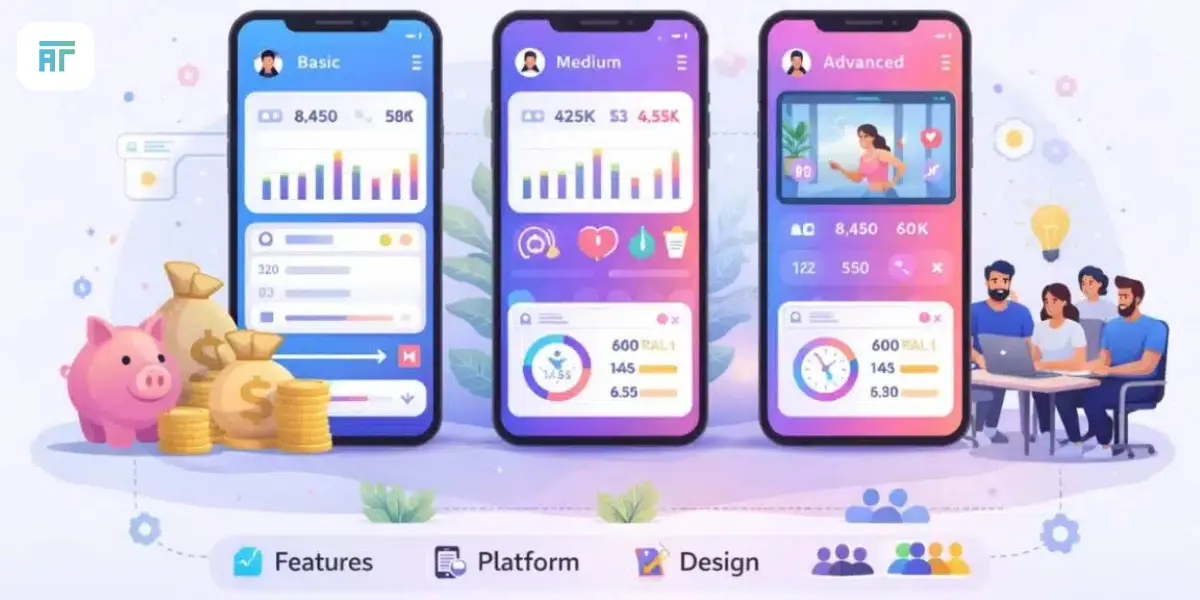
The budget needed for an instant parcel delivery app mostly hinges on the feature set of the initial version. Apps featuring only basic functionality will cost less than the ones that are heavily integrated with automation, analytics, and fleet management.
| App Type | Features | Cost Range |
| Basic MVP | Booking, tracking, notifications | ₹1,50,000 – ₹3,00,000 |
| Standard App | Payments, driver panel, admin dashboard | ₹3,00,000 – ₹7,00,000 |
| Advanced Platform | AI routing, analytics, fleet management | ₹7,00,000 – ₹11,00,000+ |
Cost Based on Platform Selection
Platform choice directly affects development effort, timelines, and costs.
| Platform | Estimated Cost |
| Android App | ₹1,50,000 – ₹5,00,000 |
| iOS App | ₹1,50,000 – ₹5,00,000 |
| Cross-Platform App | ₹2,50,000 – ₹7,00,000 |
| Android + iOS + Web | ₹5,00,000 – ₹11,00,000+ |
Hidden & Ongoing Costs After Launch
Launching an app is just the beginning of the total investment. If a business wants to create the best parcel delivery app, it will have to consider the cost of cloud hosting, map and tracking APIs, app maintenance, security updates, customer support, and marketing, among other things, as its regular expenses. These monthly operating costs range from ₹10,000 to ₹1,00,000+, depending on factors such as user traffic, number of deliveries, and the platform’s complexity.
Monetization Strategies for Parcel Delivery Apps
It is very important for any delivery business to figure out how to make money while also keeping the prices fair for the customers. A company running a parcel delivery app in Bangalore usually earns through a combination of delivery services, business partnerships, and premium offerings rather than a single source of income.
- Delivery Fees: This is the cost the customer has to pay each time a parcel is sent and delivered.
- Express Delivery Charges: If customers want their parcel delivered faster, they will be required to pay an extra fee.
- Corporate Shipping Plans: Companies that send parcels regularly can go for fixed monthly delivery packages on a subscription basis.
- Marketplace Commissions: A percentage can be taken from the delivery order in the marketplace.
- Sponsored Business Promotions: Local stores and merchants who want to get higher visibility in the app pay for it.
- Parcel Insurance Services: Customers are offered the optional coverage for their valuable or delicate parcels.
- Scheduled Delivery Services: Specific date and time slot deliveries will be charged an additional amount.
How Long Does It Take to Build a Parcel Delivery App?
Development timelines vary based on app features, platform requirements, integrations, and the overall complexity of the delivery system.
Development Timeline by Phase
| Development Phase | Estimated Timeline |
| Planning & Research | 1-2 Weeks |
| UI/UX Design | 2-3 Weeks |
| Development | 6-14 Weeks |
| Testing & QA | 2-4 Weeks |
| Deployment | 1 Week |
Timeline Based on App Complexity
| Complexity | Timeline |
| Basic App | 2-3 Months |
| Standard App | 3-5 Months |
| Advanced Platform | 5-8 Months |
Core Panels & Essential Features Architecture
Usually, a good delivery platform is organized in such a way that different panels are responsible for different tasks. This arrangement makes it easier to manage business operations. Many firms that intend to develop a parcel delivery app in Chennai provide separate interfaces for customers, delivery partners, and admin operations to accomplish smooth execution day after day.
Customer Panel
At the customer panel, customers can make delivery requests, select pickup and drop-off locations, track parcels, carry out payments, save addresses, and also view old deliveries.
Delivery Partner Panel
With a delivery partner panel, you can give your delivery personnel a way to accept delivery orders, view navigation maps, update delivery status, manage your availability, track your earnings, and view your assigned orders, all through a single interface.
Admin Panel
The admin panel is the brain behind the entire operation. It is a tool used for delivery monitoring, customer and driver account management, transaction reviewing, issue resolving, and business performance tracking.
How to Reduce Parcel Delivery App Development Cost
Many businesses that eventually become the best parcel delivery app in Bangalore do not start with a fully featured platform. One of the factors that helps reduce initial expenditure is by only focusing on the core functions of a parcel delivery app through an MVP, e.g., parcel booking, tracking, and delivery management. Moreover, by employing cross-platform frameworks and integrating existing APIs for maps, payments, and notifications, development costs may be further reduced. Opening a business in just one city at first is a wise decision, as it gives the business a chance to test operations, understand customer needs, and make changes to the product based on real user feedback rather than assumptions.
Is It Profitable to Build a Parcel Delivery App?
The delivery of parcels is no longer the exclusive realm of major logistics firms only. Even corner shops, online sellers, drugstores, and small business establishments rely on delivery services to quickly connect with their customers. This change has made space for new delivery platforms in different cities and towns. Earnings can be derived from delivery fees, partnerships with businesses, express delivery services, and regular shipping plans. Profitability, however, relies very little on the quantity of the app functionalities but rather on effectively managing deliveries, retaining customers, and growing operations over time.
Why Choose Astha Technologies for Parcel Delivery App Development?
Partnering with the right developer will greatly impact the success of your delivery platform. Astha Technologies is a delivery app development firm that collaborates with clients to create apps that fit their requirements perfectly without using ready-made templates. As a mobile app development company in Chandigarh, we create easy-to-scale systems featuring live GPS tracking, secure payment methods, and cross-platform compatibility. Our relationship with clients goes beyond the application launch, helping them with performance maintenance, feature introductions, and supporting their growth plans.
Conclusion
The cost of developing a parcel delivery app varies with feature requirements, platform selection, integrations, and the project’s overall complexity. A simple solution may cost approximately ₹1.5 lakh, while an advanced platform, equipped with automation and fleet management features, may exceed ₹11 lakh. Usually, long-term success is achieved by focusing on scalability, seamless user experiences, and efficient delivery operations. Quite a few businesses start their journey with an MVP to validate the market and then broaden their offering step by step. Astha Technologies assists enterprises in crafting delivery solutions that can easily accommodate their growth.
Ready to Build a Custom AI-Powered App?
12M+
App Downloads
6 Months
Free App Maintance
20+
Industries Served
3 Months
Free Maintenance
×